
This Homemade Shrimp Stock is easy and flexible, made with basic ingredients and shrimp shells you'd normally discard. Tailored for seafood dishes, it keeps well in the freezer, ready whenever you need to take a recipe from good to memorable.
This post is not sponsored, but you will find affiliate links on this page. As an Amazon Associate, I earn from qualifying purchases. The price you pay as a consumer does not change, but I may make a small commission based on your purchase.
Jump to:
What Is Shrimp Stock?
Shrimp stock is a flavorful liquid made by simmering shrimp shells with vegetables and herbs to extract their natural flavors. It's used as a base for soups, sauces, and seafood dishes, adding depth and richness that water alone can't provide.
Because it's made from shrimp shells-often something you'd otherwise discard-it's both economical and packed with seafood flavor. A good shrimp stock enhances dishes like Shrimp Étouffée, Seafood Gumbo, and sauces by reinforcing the main ingredient rather than competing with it.
What Is Shrimp Stock Used For?
Shrimp stock is used in soups, stews, sauces, and rice dishes to add seafood flavor. It's especially useful in recipes like gumbo, étouffée, and bisques, where it strengthens the overall flavor of the dish.
Keys to a Great Homemade Stock
This Homemade Shrimp Stock is made with basic ingredients and shrimp shells you'd normally discard. Tailored for seafood dishes, it keeps in the freezer, ready whenever you need to take a recipe from good to memorable. Here are a few simple principles to help you get the most out of any homemade stock:
- Use quality vegetables. This is a stockpot, not a trash bin.
- Use herbs to support, not dominate. They should add background flavor, not hijack the profile.
- Start with cold water. This helps extract flavor more evenly.
- Keep it at a gentle simmer. Boiling can make the stock cloudy and harsh.
- Skim the impurities that rise to the surface; do not stir them into the simmering stock.
- Don't stir while it simmers. Stirring redistributes impurities and clouds the stock.
- Skip the salt. Stock is an ingredient-season the final dish instead.
Here's What You Need
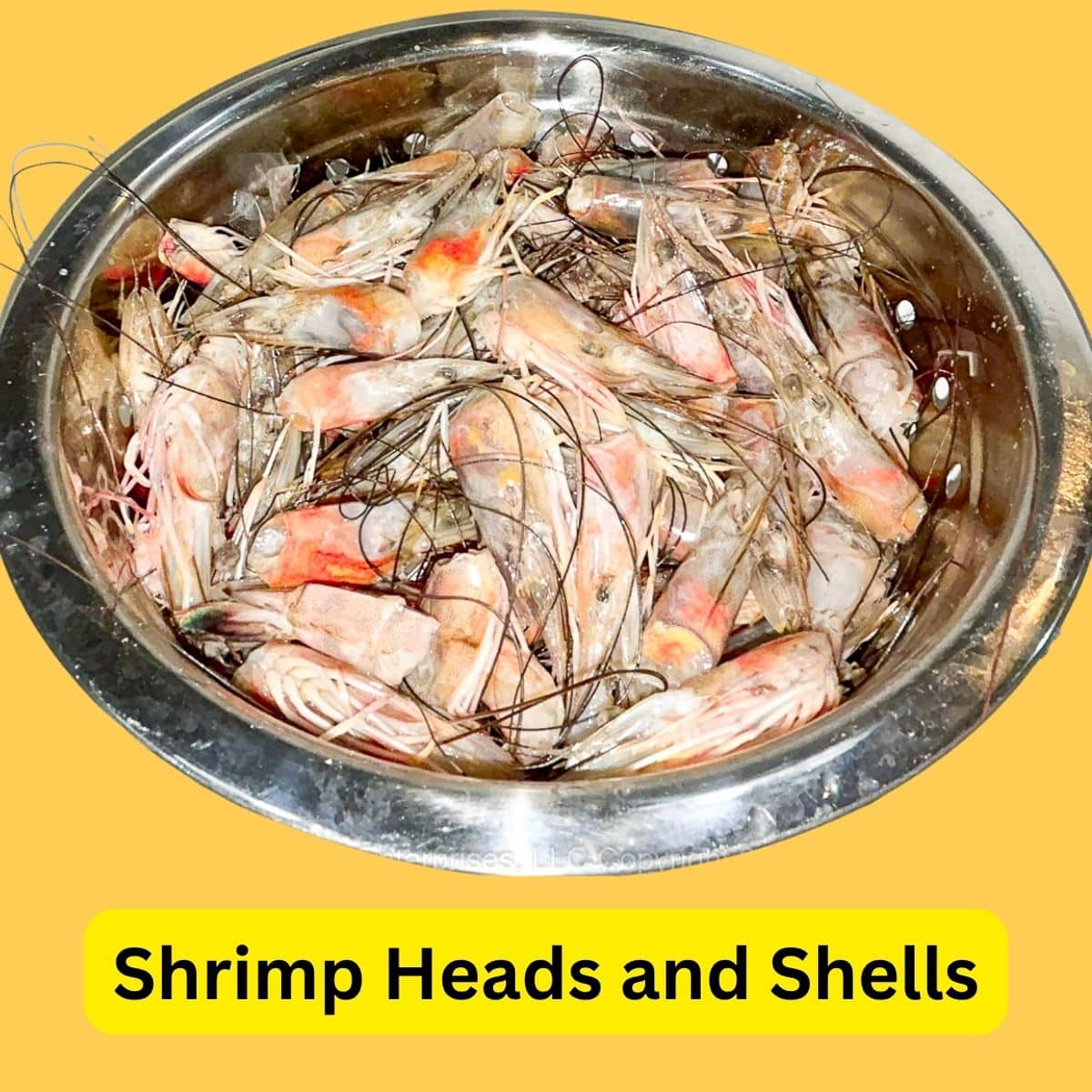
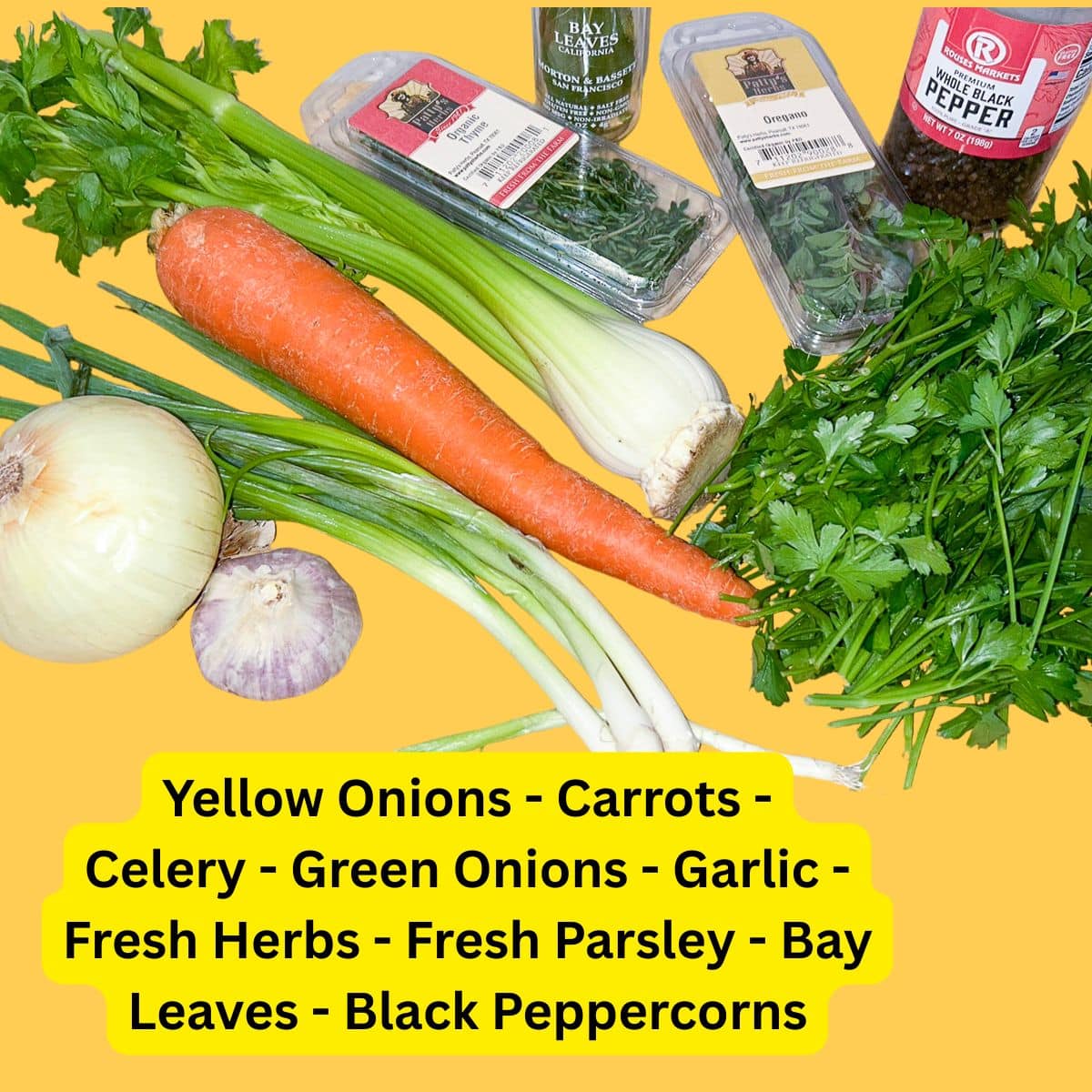
These are the key ingredients used in this recipe. A complete list, with quantities, is included in the printable recipe card at the end of this article.
Ingredient Notes
- Keep the ingredients simple.
- Avoid any vegetables with soft spots or browning.
- You can use the onion and garlic skins, but remember that your stock pot is not a trash bin.
- Like the shells, you can store good-quality vegetable pieces in an airtight container in the freezer until you have enough to make stock.
- Basic Vegetable Bundle: Yellow Onions, Celery, Carrots, Garlic, scallions (green onions).
- Fresh Herbs: Choose herbs that support the seafood flavor without overpowering it. Thyme, basil, marjoram, and parsley work well. Oregano should be used in moderation.
- Herbs to avoid: These herbs have a strong flavor that may overpower the other ingredients, and should be avoided: Rosemary, Sage, Mint, Cilantro, and heavy Oregano use.
Lagniappe Tip: To use fresh herbs, tie them in a bouquet garni so they're easy to remove. If using dried herbs, place them with the peppercorns and bay leaf in a spice or garni bag.
Substitutions
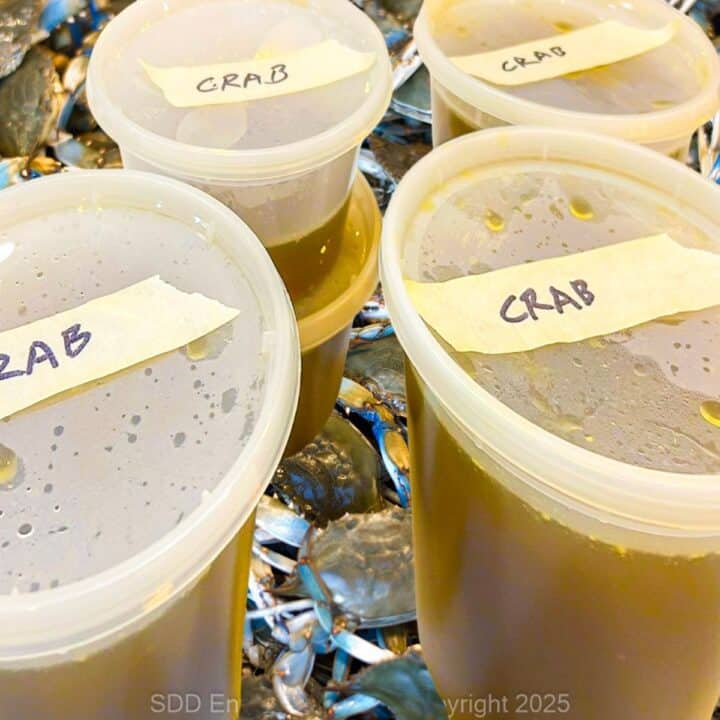
- This recipe can be used for crabs, crawfish, or lobster shells using the same process. Check the full recipe for Crab Stock and Crawfish Stock.
- Margarine is used to provide some fat when roasting or browning the shells. This is optional and can be substituted with any neutral oil, butter, or even left out.
- Fresh herbs: If you don't have basil/oregano, stick with thyme, parsley, or bay leaves.
- Dried herbs work fine, but make sure to bundle them in a spice bag.
Lagniappe Tip: Bouquet garni alternatives: If there's no twine or spice bag, fresh or loose herbs can be used. These can be strained out, but it is recommended that you use cheesecloth or damp paper towels in your strainer to get the smaller pieces.
Cookware
It's worth investing in a nice stockpot that is perfect for Homemade Stocks as well as Gumbos, Soups, and Bisques. In addition, you should have on hand a good kitchen strainer, quality storage containers, kitchen twine, and garni (spice) bags.
Hints and Tips (FAQ)
Shells can be used without the heads, but heads provide a deeper flavor.
You can do either, but roasting triggers the Maillard reaction, which builds nuttier, richer flavors. See the Lagniappe Tip below for all your options.
Yes, use dried herbs in a spice bag.
Stock is a foundational ingredient in other recipes. Waiting to salt the final dish prevents oversalting.
Shrimp shells are relatively delicate and only require about an hour at a very low simmer to extract flavor without bitterness.
When making stock, the foam you skim is made up of proteins and impurities released from the shrimp shells and vegetables as they heat up. These rise to the surface as a grayish or tan foam. Skimming removes these impurities, which helps keep the stock clear, clean-tasting, and free of bitterness. Left in the pot, they can cloud the stock and give it a slightly muddy flavor.
Here's What You Do
First…you have a beer. That's the secret to no-angst cooking-fun, relaxed, and rewarding. Sip while you read the recipe from start to finish. Then perform your mise en place: gather your ingredients, prep them as they'll be used, and set out your equipment. With everything in place and your mindset right, you're ready to cook with confidence and enjoy the process as much as the meal.
Mise En Place
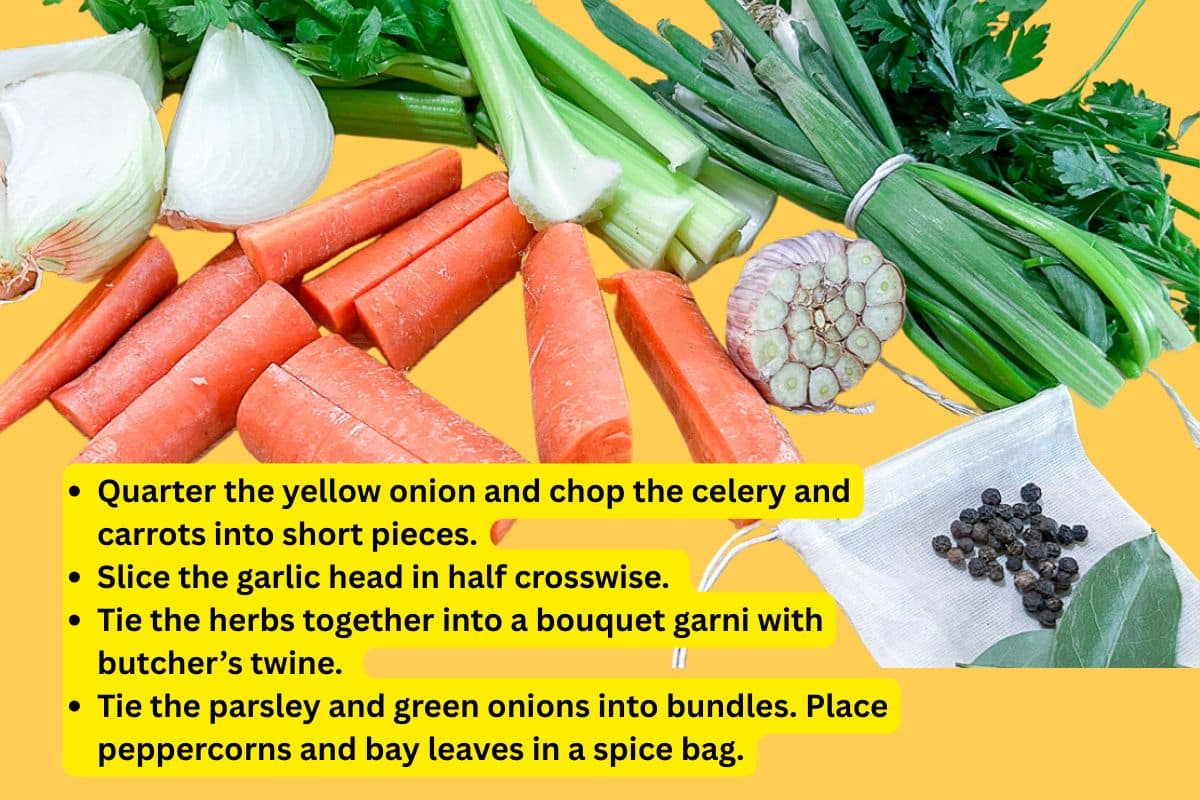
No-angst cooking continues with mise en place. Before you ever turn on the heat, prep and measure every ingredient exactly as it will be used (chopped, diced, sliced, or minced). When everything's ready to go, most of the work is behind you-and the cooking becomes simple, seamless, and enjoyable.
Laigniappe Tip: Why Roast the Shells?
Roasting or sautéing shrimp shells triggers the Maillard reaction, which is a natural browning process that develops a deeper, toasted flavor. As the shells darken, they release richer, more complex flavors that carry into your stock.
Options:
- Roast the shells for the deepest flavor and darkest color.
- Sauté the shells for good flavor with a slightly lighter color.
- Skip this step for a lighter, more delicate stock.
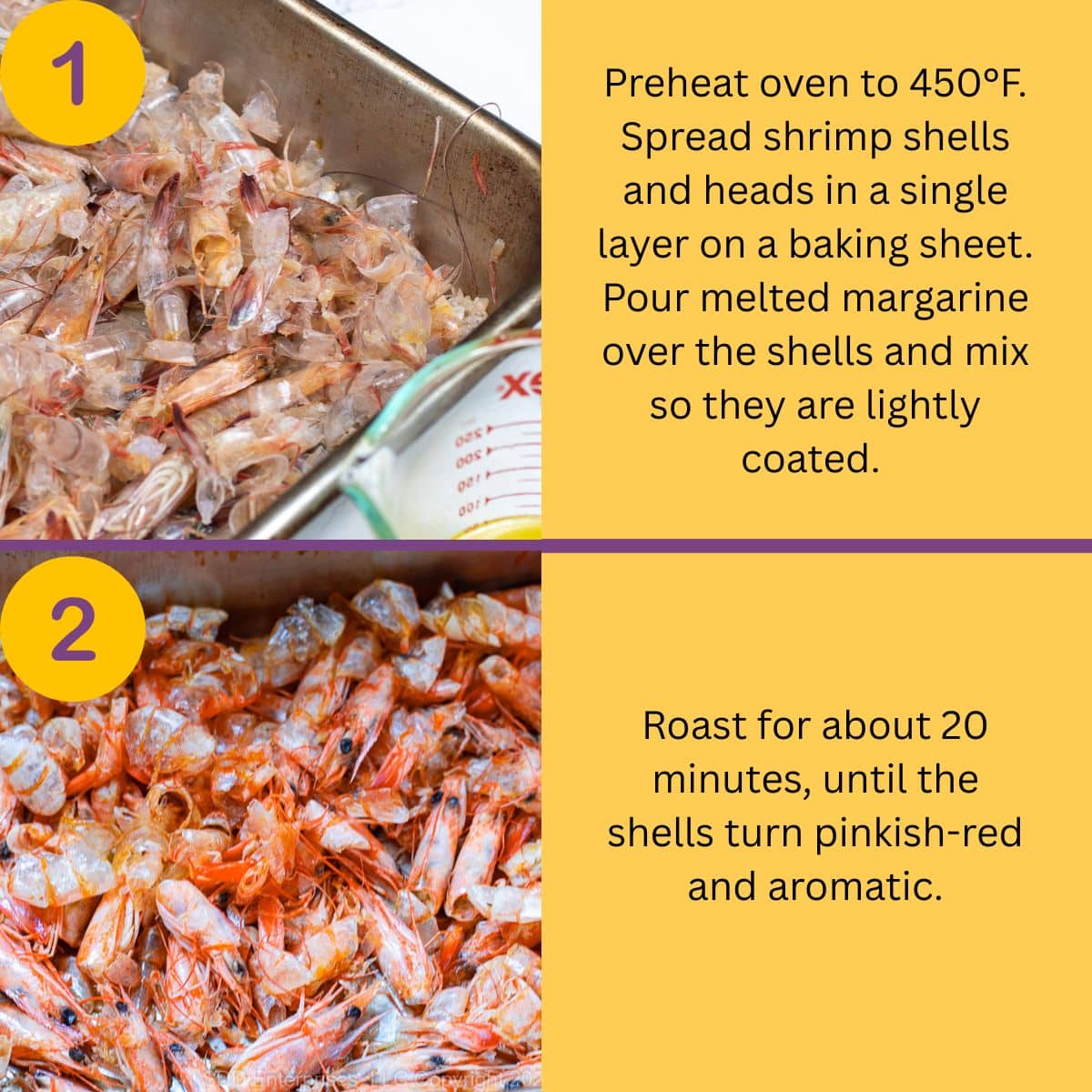
Roast Shells (Optional, for Deeper Flavor)
What happens in this step? Roasting the shells develops a deeper flavor through browning. As the shells darken, they release toasted, savory notes that make the finished stock richer and more complex.
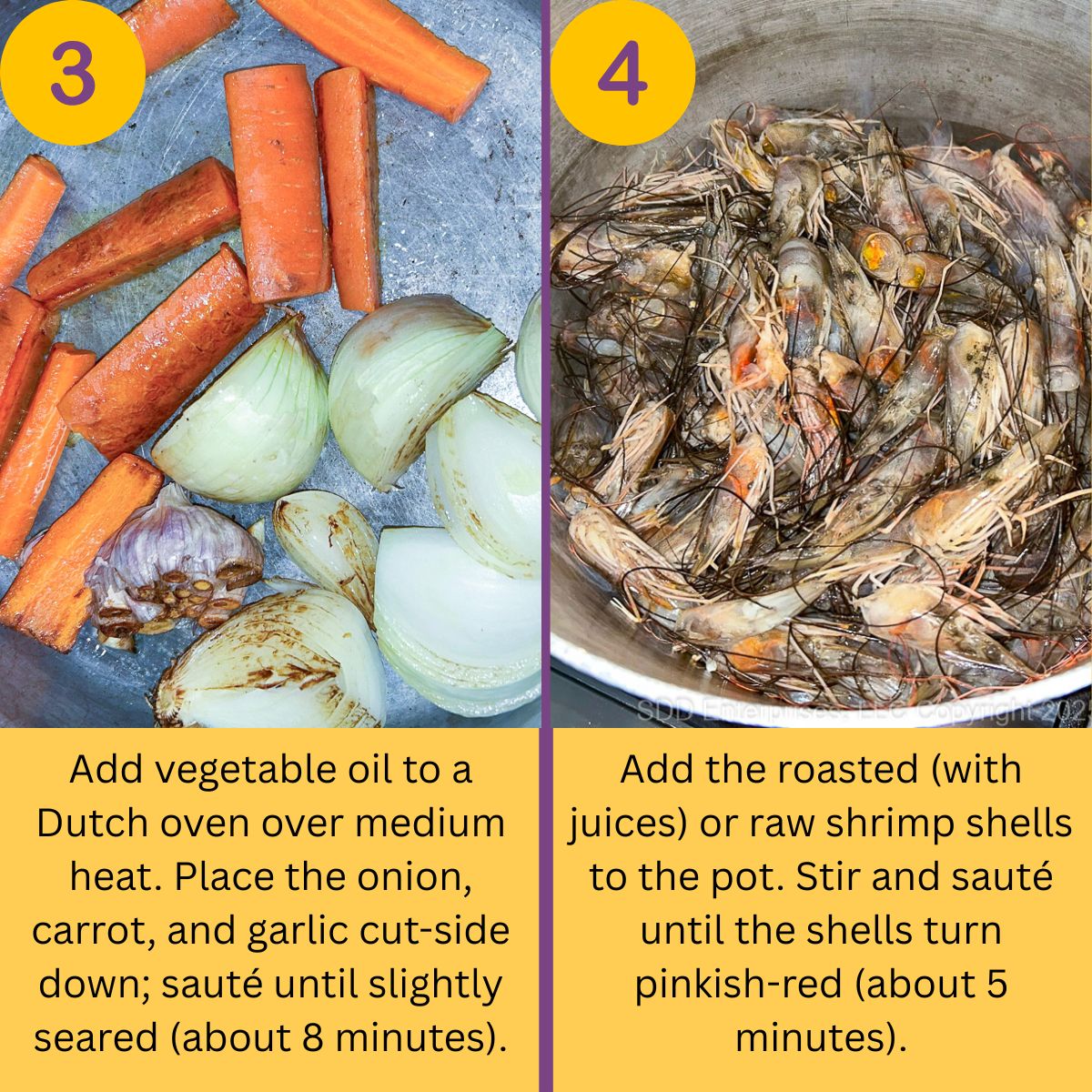
Sear the Vegetables to Build Flavor
What happens in this step? Searing the vegetables lightly caramelizes their natural sugars, adding a subtle sweetness and depth. This step builds a stronger flavor base before the liquid is added.
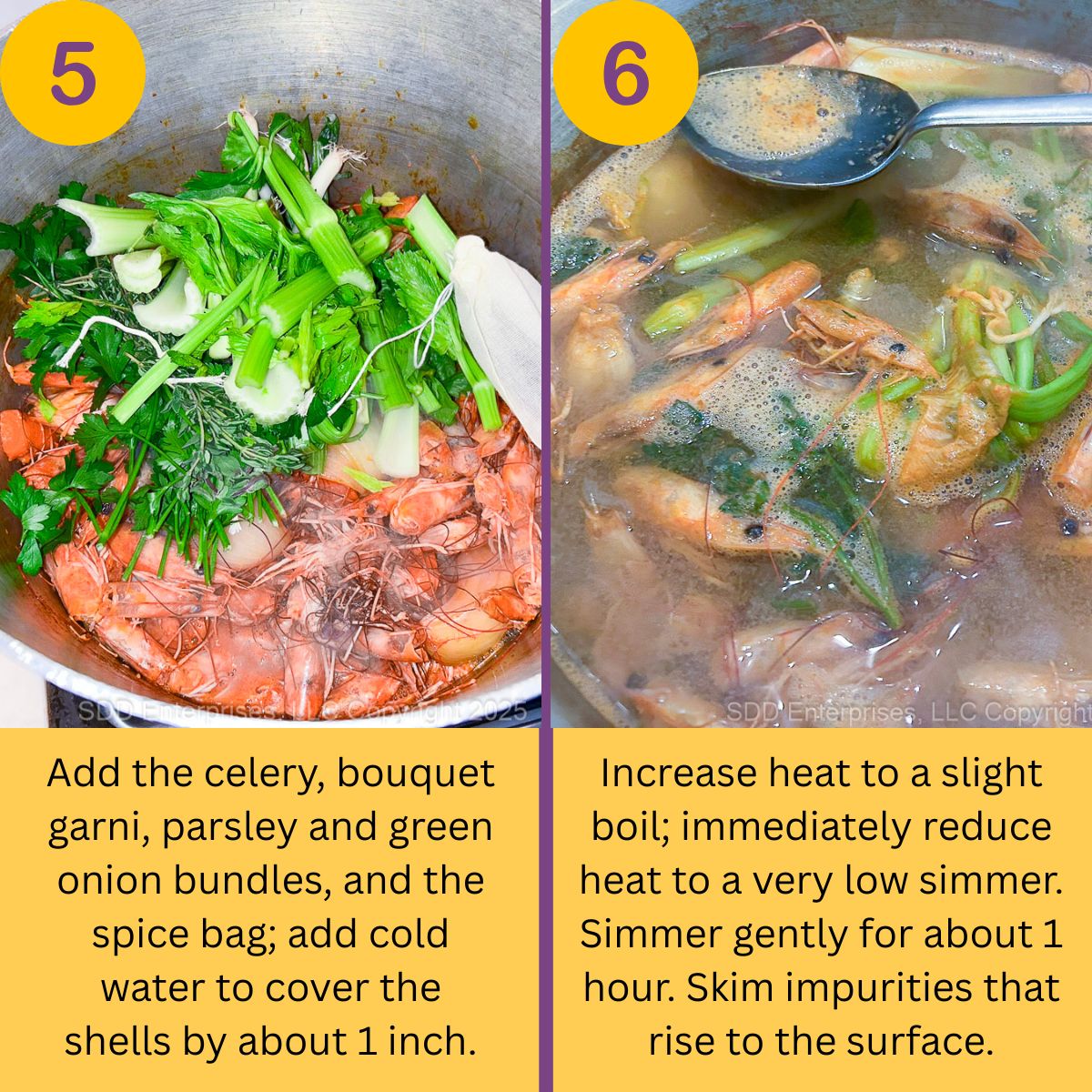
Add the Remaining Ingredients and Water
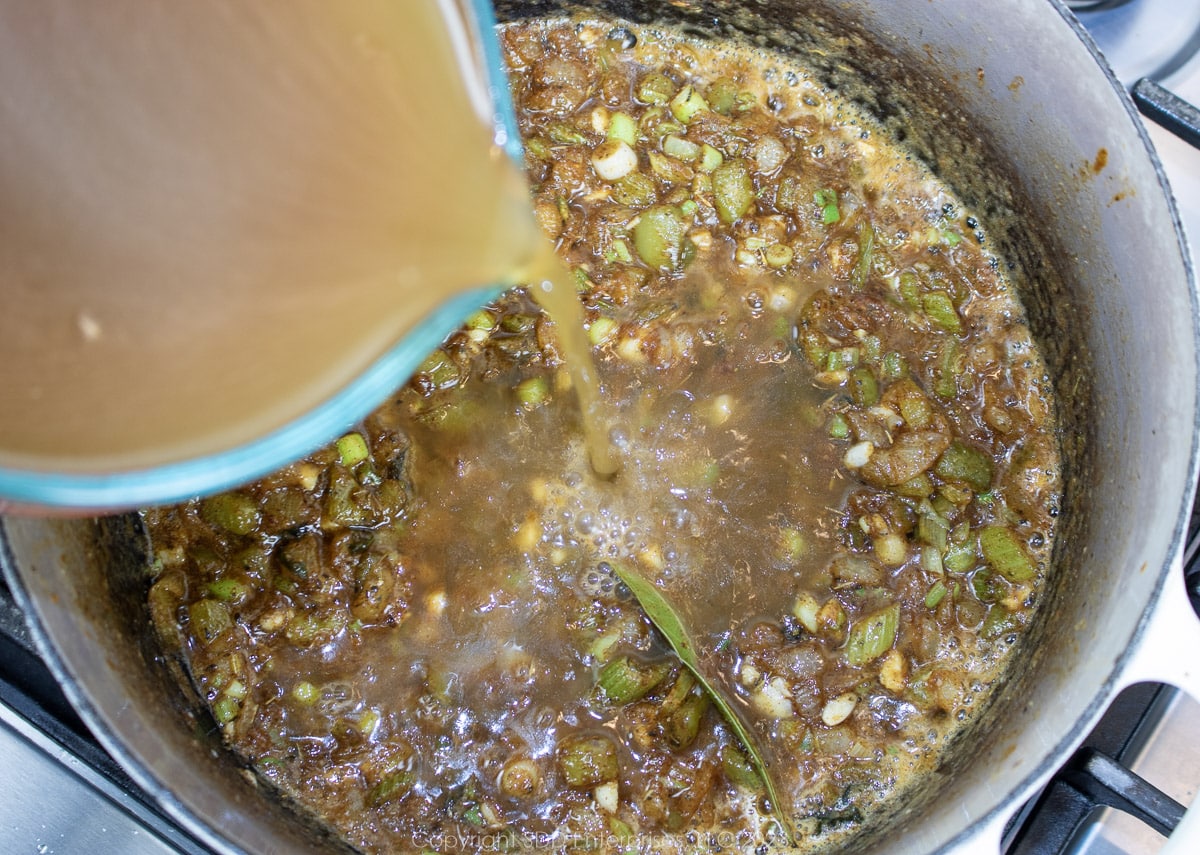
What happens in this step? Adding cold water allows the flavors from the shells, vegetables, and herbs to slowly extract as the stock heats. This gradual process helps create a cleaner, more balanced stock.
Lagniappe Tip: When making stock, the foam you skim is made up of proteins and impurities released from the shrimp shells and vegetables as they heat up. These rise to the surface as a grayish or tan foam. Skimming removes these impurities, which helps keep the stock clear, clean-tasting, and free of bitterness. Left in the pot, they can cloud the stock and give it a slightly muddy flavor.
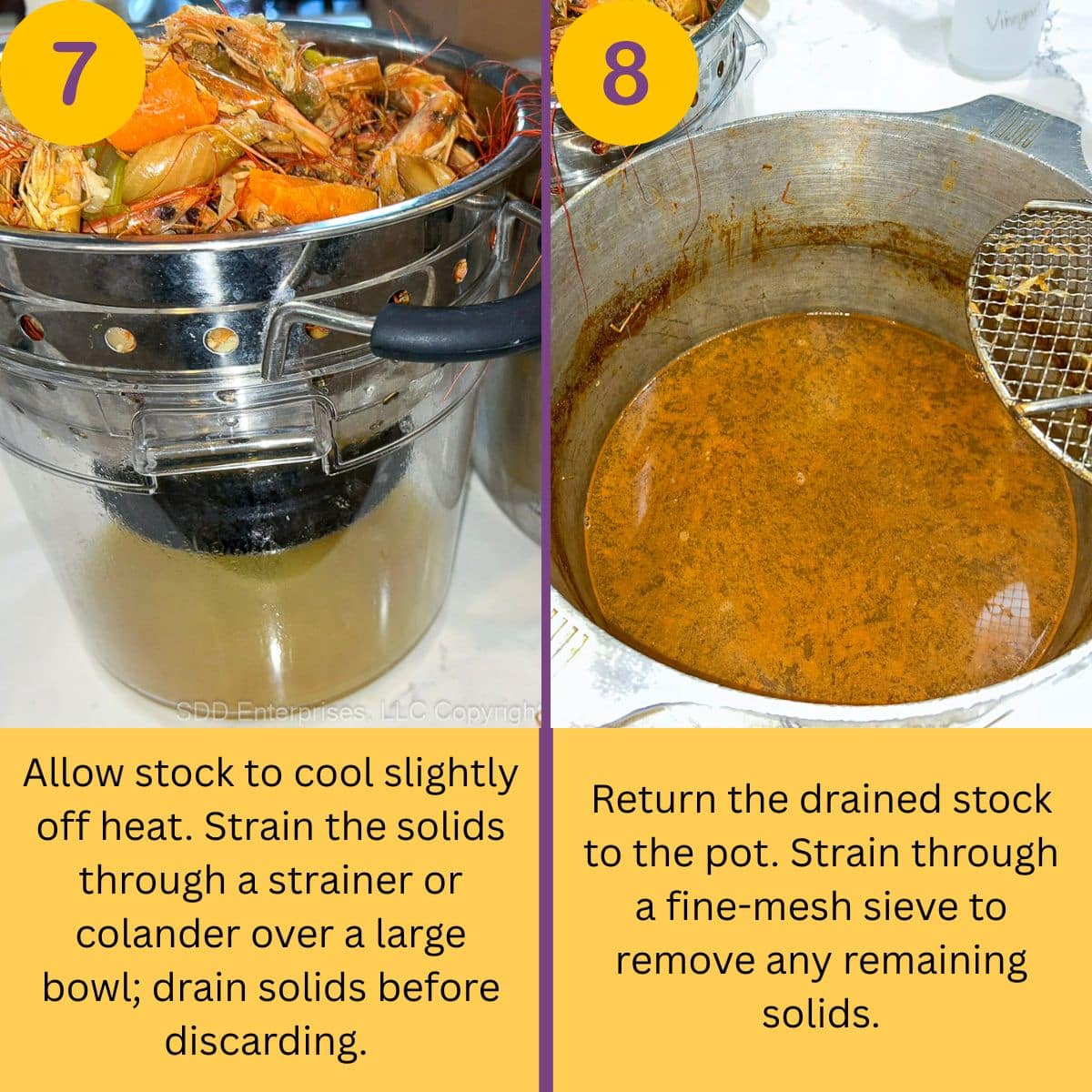
Strain and Store the Stock
What happens in this step? Straining removes all solids, leaving a smooth, clean stock. A second fine strain ensures clarity, giving you a polished stock that's ready to use or store.
Storage Tips
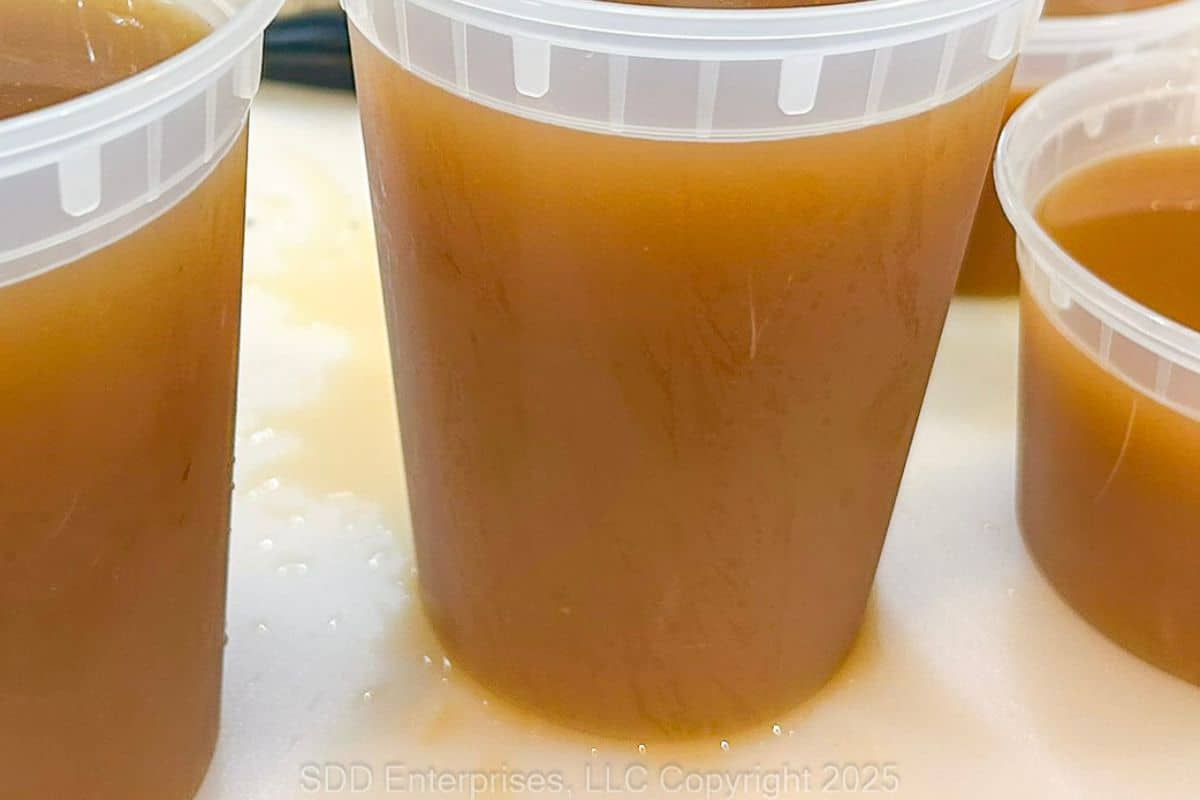
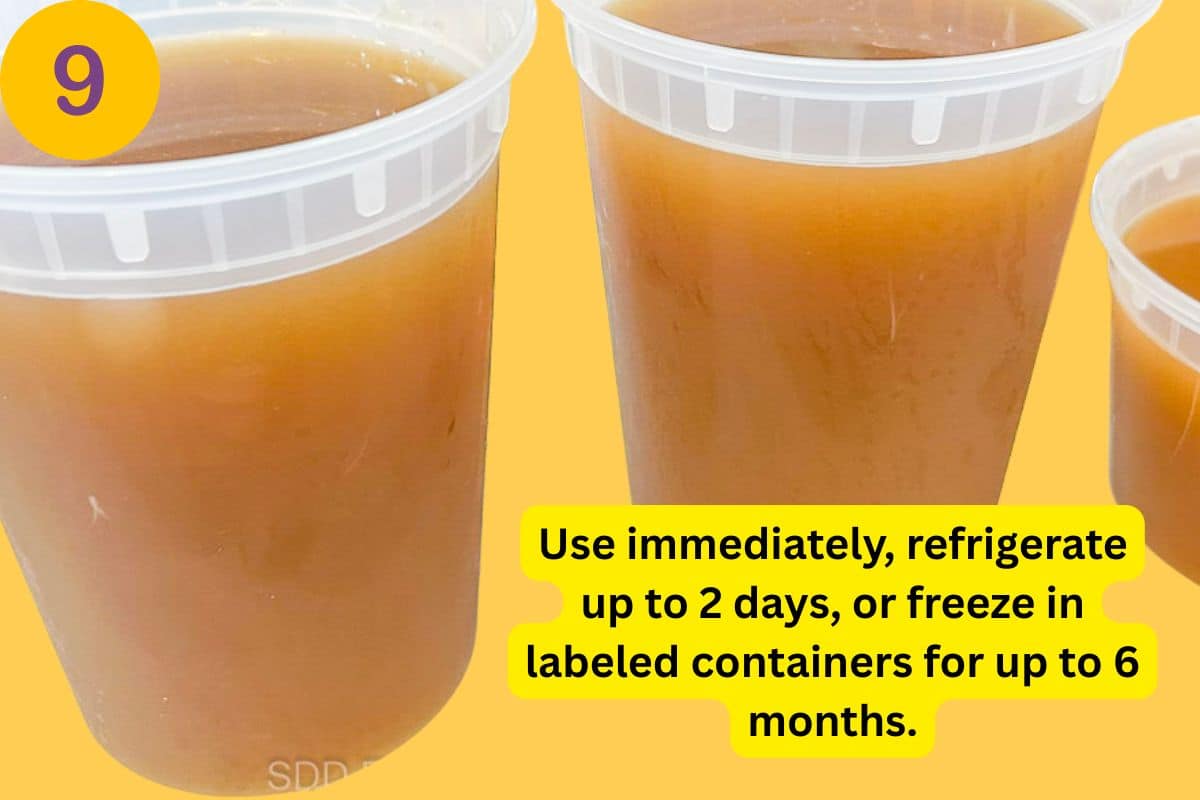
Store fresh Homemade Shrimp Stock for 2 days in the refrigerator or 6 months in the freezer.
Lagniappe Tip: Cool the stock completely within 2 hours of making before refrigerating/freezing to avoid bacterial growth. Place the pot in an ice bath to speed cooling if necessary.
Tips for Storage:
- Use air-tight containers with sealable lids.
- Use freezer-safe containers for the freezer.
- Leave about 1 inch of headroom in the container to allow for expansion when frozen.
- Portion containers for 1 quart, 1 pint, and 1 cup sizes, if possible.
- Label containers with content and date.
- Do not refreeze after thawing out.
Serving Suggestions
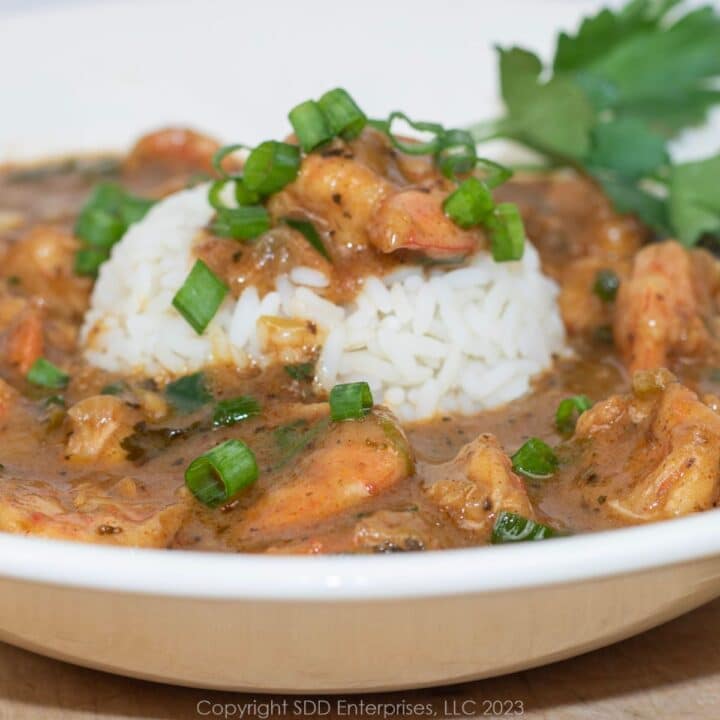
Homemade Shrimp Stock is a flavor amplifier for any shrimp or seafood-based dish you make. It's perfect in sauces, braises, soups, bisques, and gumbo.
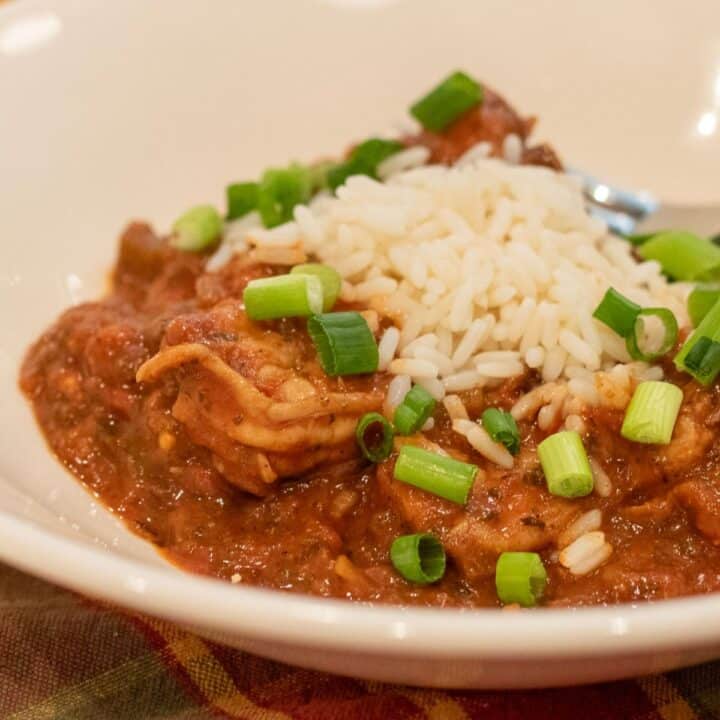
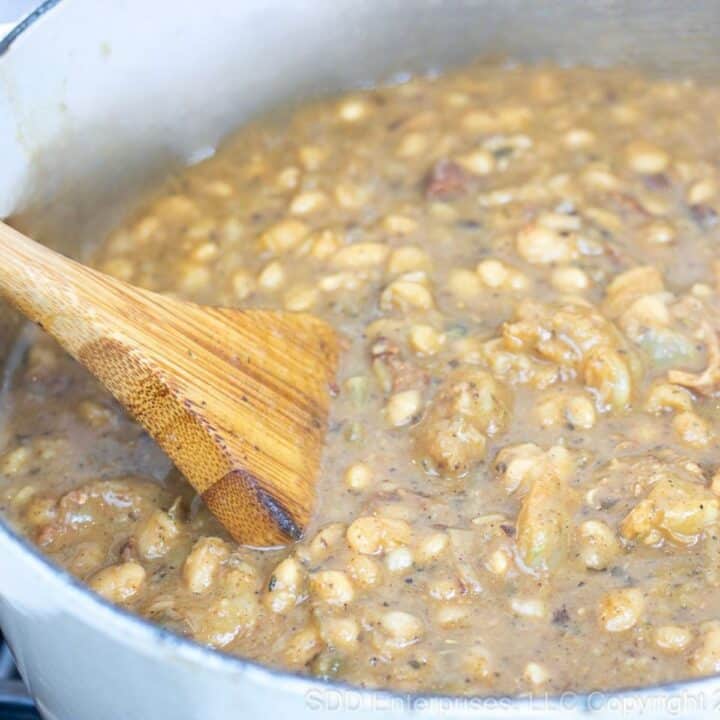
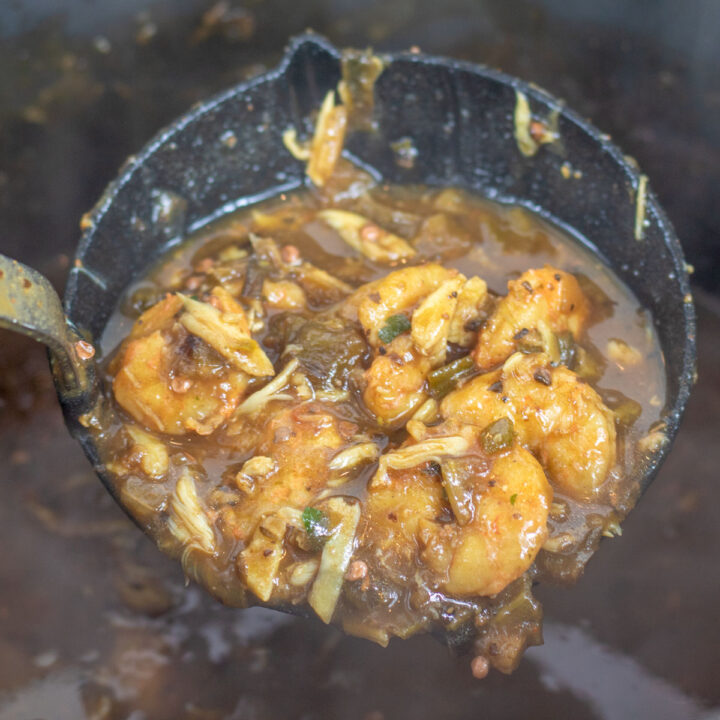
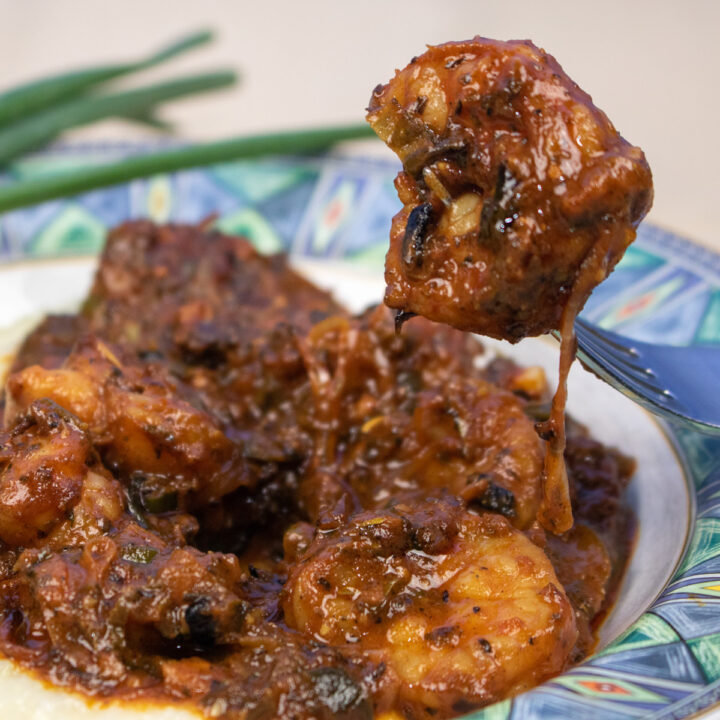
These recipes are especially elevated when using Homemade Shrimp Stock:

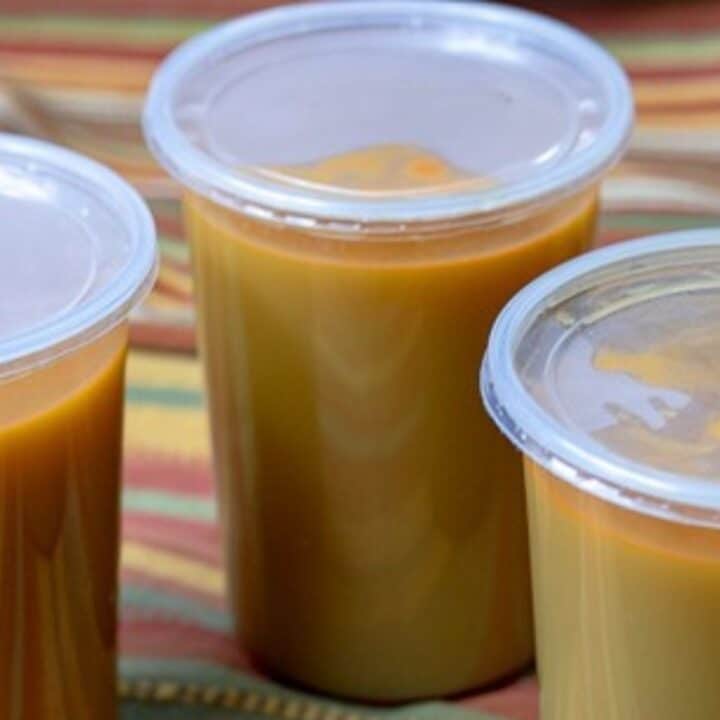
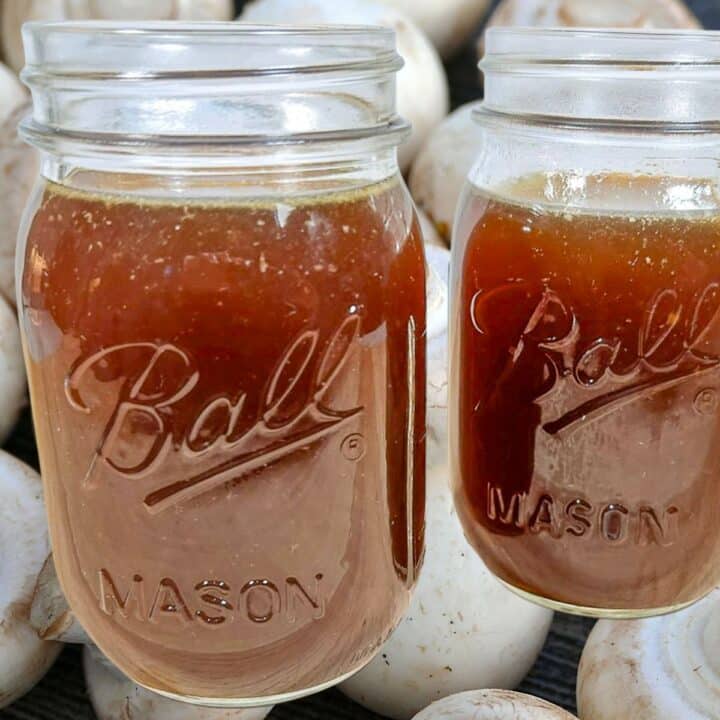
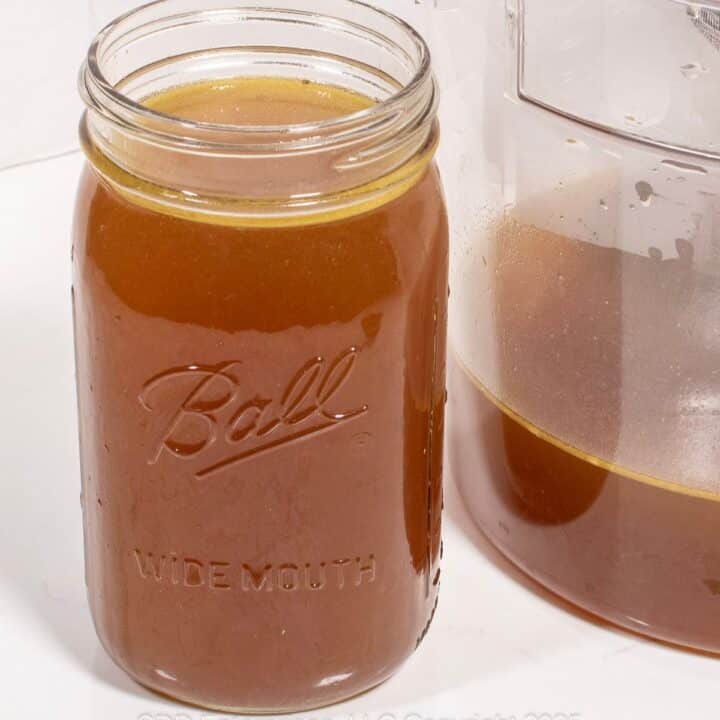
More Homemade Stocks
Tell Us About It!
Tried this recipe? ⭐⭐⭐⭐⭐ Leave a 5-star rating and a comment below!
📧 Sign up for email updates so you never miss one.
📸 Share a pic on social and tag us-we'd love to see it!
Yeah You Right!
Publisher's Note: Originally published in February 2019, this recipe has been updated with improved instructions, new photos, expanded notes, and additional tips. The process remains the same-simple and reliable, now with greater clarity.
Recipe
Homemade Shrimp Stock
Here's What You Need
- 4 quarts shrimp shells with heads
- ¼ cup margarine See Notes
- 1 large onion quartered
- 3 stalks Celery with leaves
- 2 large carrots
- 1 heads garlic sliced in half
- 1 Bunch green onions
- 1 bunch parsley tied together
- 10 peppercorns in spice bag
- 4 quarts cold water
Herb and Spice Blend-Tied in a Bouguet Garni
- 1 ounce fresh thyme See Notes
- 1 ounce fresh basil See Notes
- 1 ounce fresh oregano See Notes
- 2 bay leaves
Here's What You Do
Roasting the Shells (optional)
- Preheat oven to 450 degrees. (See Notes)
- Spread shrimp shells and heads in a single layer on a lined baking sheet. (Use two baking sheets if necessary).
- Pour melted margarine over the shells; mix the margarine on all the shells.
- Place baking sheets in preheated oven and let roast for about 20 minutes.
Prepare Remaining Ingredients
- Quarter the yellow onion. Chop the celery into short pieces. Tie the herbs together in a Bouquet Garni; tie the parsley and the green onions into Bouquets Garni. Place peppercorns and bay leaves in a small garni (spice) bag.
Make the Stock
- Add a little vegetable oil to a Dutch oven over medium heat; add the cut vegetables (yellow onions, carrot, and garlic), cut side down, to the stockpot; saute until slightly seared, about 8 minutes.
- Add the roasted (with any liquid generated during roasting) or raw shells to the stockpot; stir and saute until the shells turn pinkish-red, about 5 minutes.
- Add the celery (with leaves), Bouquets Garni, and the garni bag to the Dutch oven.
- Add the cold water to about 1 inch above the shells.
- Increase the heat to high and bring the liquid to a slight boil, then immediately reduce the heat to maintain a slight simmer. (See Notes)
- Maintain a very low simmer for about 1 hour. Do not stir.
- From time to time, skim off any impurities that rise to the surface. Do not stir the impurities back into the stock.
- Turn off the heat and allow the stock to cool so it will be easier to handle and the flavors continue to blend.
- Place a strainer or colander over a large bowl; using a slotted spoon, remove the solids and drain until all the solids have been removed.
- Discard all the solids and return the drained stock back into the stockpot.
- Place a fine mesh strainer, and pour the liquid through to remove any remaining solids. (See Notes)
- The stock can be used immediately or stored in the refrigerator for a couple of days. If the stock will not be used within a couple of days, place the strained stock in freezer containers, label the containers, and freeze for up to six months.
Recipe Notes
Nutrition Estimate

It's Me!
Louisiana is a wonderful place where the rich cultural heritage enriches and entertains. I'm Dave Howson, aka Sweet Daddy D. I'm glad you found my website and I look forward to exploring the cultural mosaic of Louisiana with you…
read the "It's Me" page to find out more about me and this website…
Mary Cooley says
HI
I just read your wonderful step by step directions on making shrimp stock. It was explained well and provided information and tips that I can feel confident in making the stock. I have 1 question. Should I rinse or clean the shrimp shells before preparing the stock? and Can I combine crab shell to the shrimp shells to make the stock?
Thank you
MHC
Sweet Daddy D says
Thanks for those kind words, Mary. I'm confident you can make it too! I usually rinse the shrimp in cold water before I peel them. Then I either make the stock then, or stick them in a 1 Qt deli container, fill it with water and stick it in the freezer. Thanks for the question and let me know how it turns out.
Mary says
Daddy D,
thanks for replying to my question as to rinsing shells before making stock. I saw your reply to my question just now as I was resending the same question. Thank you. I like the step of rinsing shrimp before peeling,
Thank you
Mary
Sweet Daddy D says
Thanks, Mary. I hope you like the way the stock turns out!