
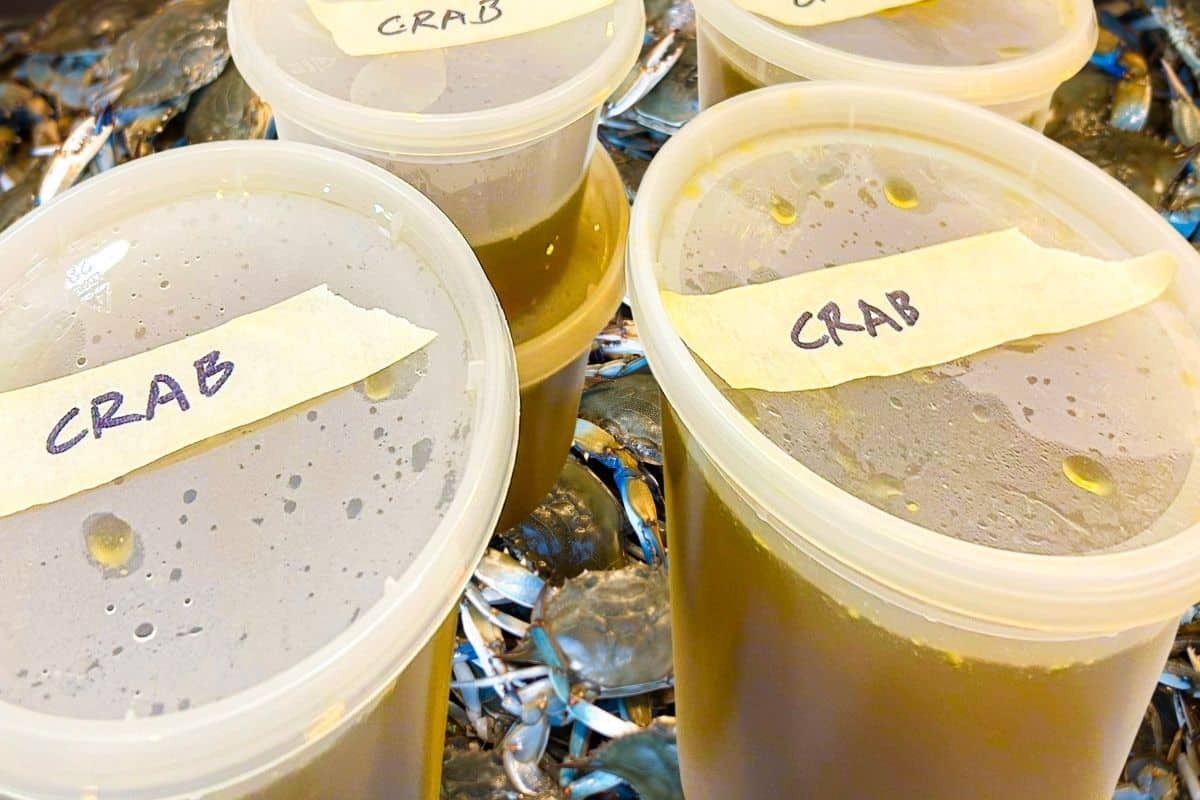
If you want to take your cooking to the next level, making your own stock is one of the most rewarding skills you can master. Homemade stocks can be tailored to your taste, your recipes, and any dietary needs. This Homemade Crab Stock brings depth and clarity to gumbos, bisques, and sauces featuring crab or other seafood. It's far simpler to make than you might expect, especially considering the payoff it delivers. Master stock-making, and the world is your oyster, or crab, in this case!
This post is not sponsored, but you will find affiliate links on this page. As an Amazon Associate, I earn from qualifying purchases. The price you pay as a consumer does not change, but I may make a small commission based on your purchase.
Jump to:
It Starts with a Stock
Crab stock is the foundation of many seafood dishes, especially in classic Cajun and Creole cooking. Used in gumbos, bisques, courtbouillons, and sauces, it adds subtle depth, reinforcing crab flavor rather than masking it. Unlike water or most commercial seafood stocks, homemade crab stock brings body, aroma, and authenticity that can be tailored to your specific purpose. This is the secret ingredient that turns a good seafood dish into a memorable one.
Sign up for my email notifications of new recipes and posts right HERE.
Here's What You Need
These are the key ingredients used in this recipe. A complete list, with quantities, is included in the printable recipe card at the end of this article.

What are Gumbo Crabs? Gumbo Crabs are small blue crabs (that spectacular species of crabs found in the brackish and salt water of coastal Louisiana), "dressed" by removing the back shell and gills, then frozen. A not-so-secret ingredient in South Louisiana, gumbo crabs are used primarily for their flavor, not their meat, in gumbos, soups, bisques, sauces, and other regional Louisiana dishes.
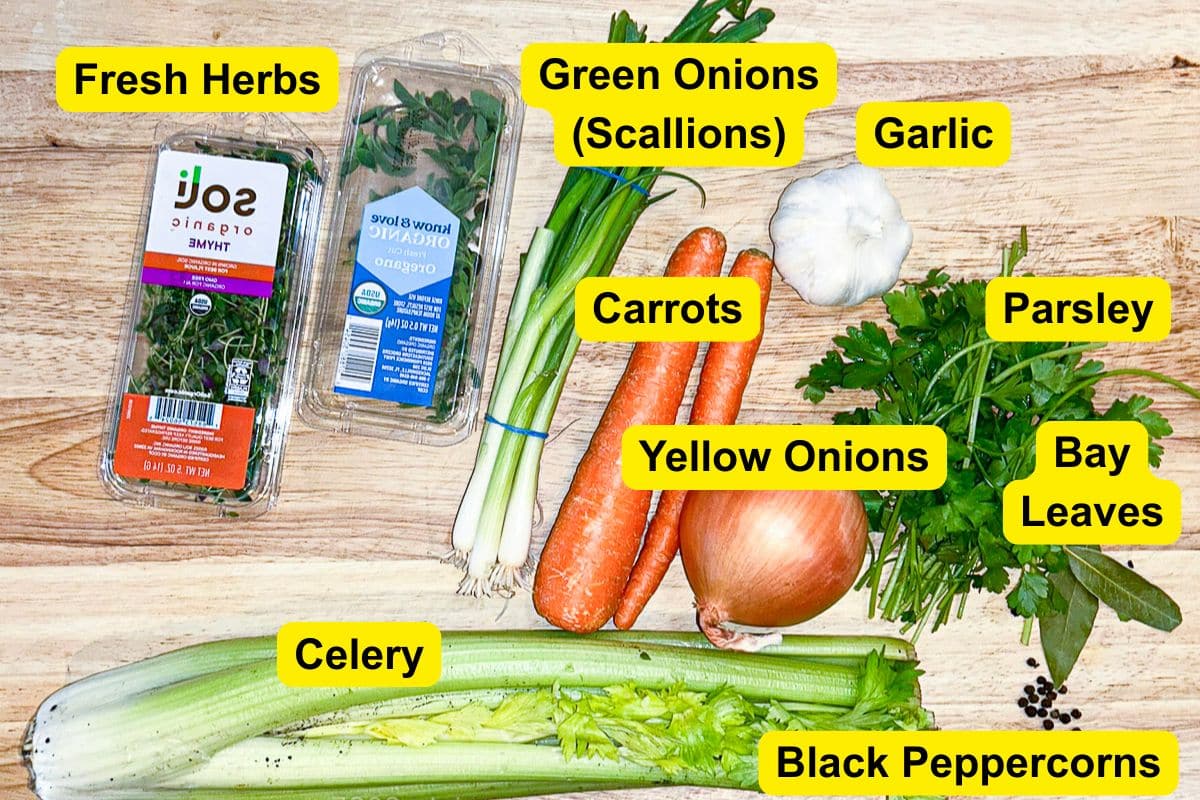
Ingredient Notes
The most important thing to remember about stock ingredients: the stockpot is not a garbage bin. While items like onion peels or parsley stems can be used, they should be fresh and free of soft spots or blemishes. Just as important, keep the ingredient list fairly generic: stock is about versatility, building richness and depth without overpowering the final dish. If the stock is being made for a specific purpose, you can be a bit more flexible. With that in mind, here are my guidelines for stock ingredients:
- Gumbo Crabs: These pack the most flavor, but you can substitute crab claws or shells.
- Vegetables: Yellow onions, celery, and carrots are used because they form a neutral, balanced flavor base that supports the main ingredient without competing with it.
- Herbs: Fresh herbs add a floral note that enhances and supports the stock's base flavors. Use hardy, neutral herbs like thyme, bay leaf, and parsley stems.
Sign up for my email notifications of new recipes and posts right HERE.
Ingredients to Avoid
Our goal is a clear stock that will be a foundational ingredient in other dishes. Since it will simmer for long periods of time, we want vegetables and herbs that enhance flavor, rather than overpower it, and we want things that will hold up to a long braise.
- Avoid vegetables that would dominate a long braise. Cruciferous vegetables, such as cabbage, broccoli, cauliflower, Brussels sprouts, and kale, intensify with prolonged heat and quickly overpower the stock. Starchy vegetables like potatoes and sweet potatoes release starch as they break down, resulting in a cloudy, dull stock. Strong or watery greens, including spinach, lettuce, and chard, collapse quickly and can contribute bitterness. Beets and bell peppers tend to overwhelm other flavors, while highly aromatic or sweet vegetables such as fennel, parsnips, and turnips push the profile away from a clean, crab-centric stock.
- Avoid delicate or strong herbs (basil, cilantro, dill, rosemary, sage), which break down during simmering and overpower or muddy the stock's flavor.
- Spices: Beyond peppercorns, avoid salt and other seasonings (Creole or Cajun seasoning, etc). You will add those things to the final dish to align with its flavor profile.
Cookware
This post is not sponsored, but you will find affiliate links on this page. As an Amazon Associate, I earn from qualifying purchases. The price you pay as a consumer does not change, but I may make a small commission based on your purchase.
For this recipe, a heavy-duty stock pot is essential for maintaining steady heat during the long simmer. You'll also need strainers (a fine-mesh strainer is ideal), garni bags or cheesecloth for herbs and spices, and kitchen twine for tying bouquet garnis. Airtight storage containers are important for refrigerating or freezing the finished stock. Standard cutting boards and sharp knives are also required for prep, though these are basic kitchen tools rather than specialty equipment.
Hints and Tips (FAQ)
Boiling breaks down the crab shells too aggressively and stirs impurities into the liquid, making the stock cloudy and harsh. A gentle simmer extracts flavor slowly and cleanly.
Gumbo crabs are ideal because their shells deliver deep flavor. In a pinch, cleaned crab shells or crab bodies will work.
Stock is a building block, not a finished dish. Salting limits your control later and can easily make the final recipe too salty.
Not at all. Cloudiness affects appearance more than flavor. Next time, keep the heat lower, skim more often, and avoid stirring.
Yes-and you should. Crab stock freezes beautifully. Cool it completely, freeze it in measured portions, and it will keep its quality for up to six months.
Here's What You Do
First…you have a beer. That's the secret to no-angst cooking-fun, relaxed, and rewarding. Sip while you read the recipe from start to finish. Then perform your mise en place: gather your ingredients, prep them as they'll be used, and set out your equipment. With everything in place and your mindset right, you're ready to cook with confidence and enjoy the process as much as the meal.
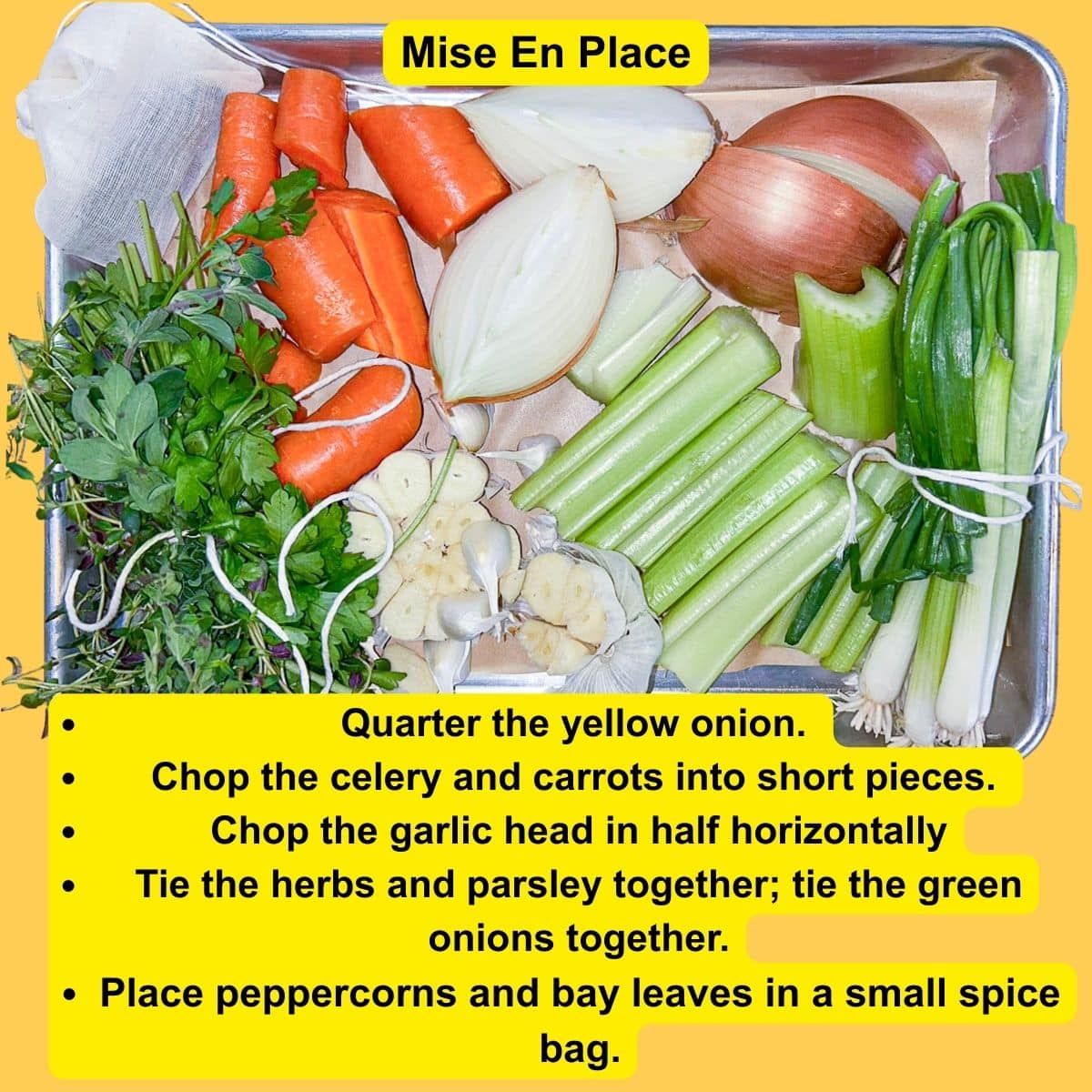
Mise En Place
No-angst cooking continues with mise en place. Before you ever turn on the heat, prep and measure every ingredient exactly as it will be used. When everything's ready to go, most of the work is behind you-and the cooking becomes simple, seamless, and enjoyable.
- To prepare the Gumbo Crabs, I usually break them in half right down the middle. I recommend defrosting them first to drain off any water derived from ice crystals, but if you are in a pinch, you can throw the crabs in frozen.
- The veggies should be cut into sizes that correspond with the braise time; if you're only simmering for an hour, cut them smaller than you would for a longer simmer. It ain't rocket science!
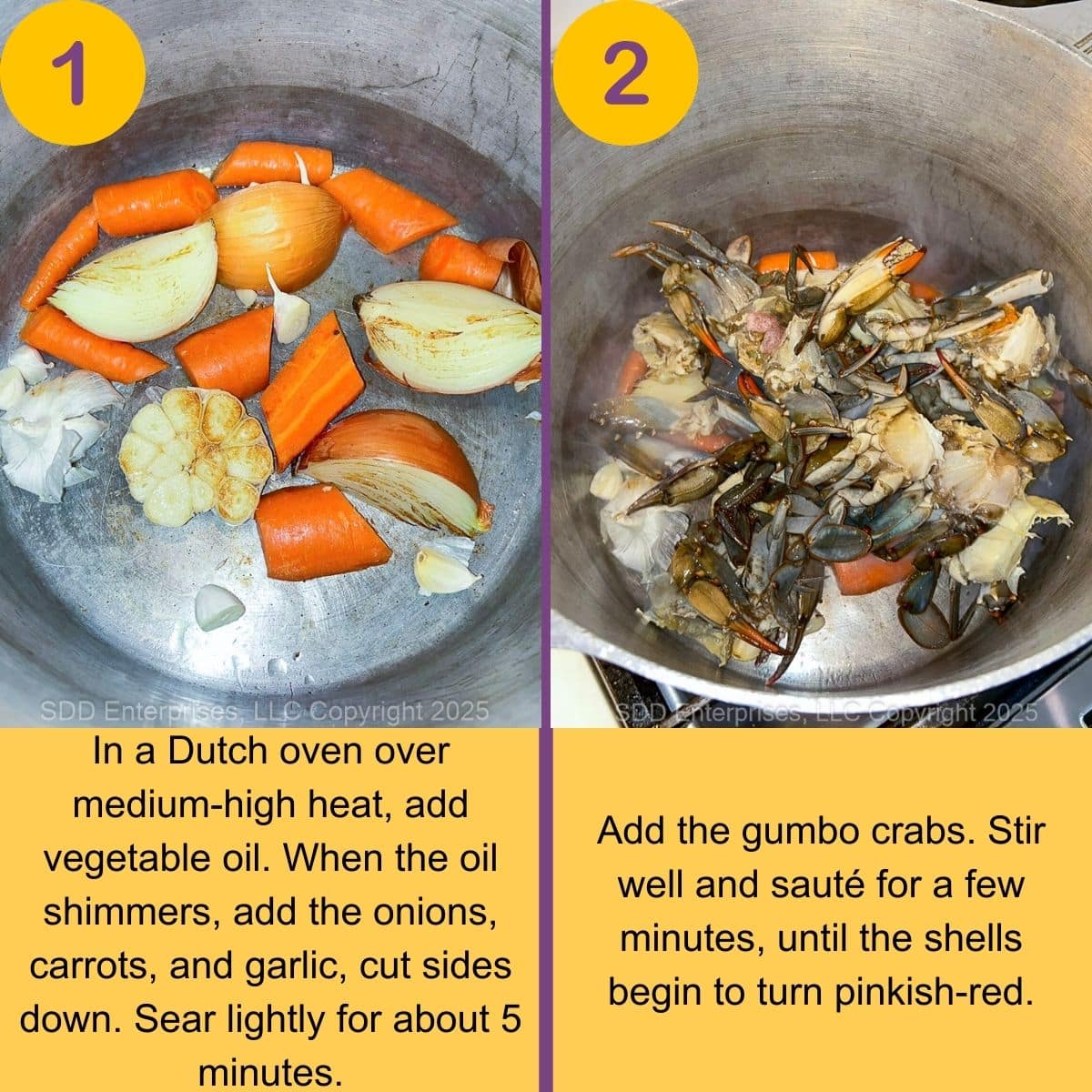
Start with a Slight Sear
What happens in this step? We are not looking for color; a slight sear activates the Maillard reaction, which helps to develop flavor.
Add the remaining ingredients
What happens in this step? The aromatics don't need to be seared, so they are added last, then topped with fresh, cold water.
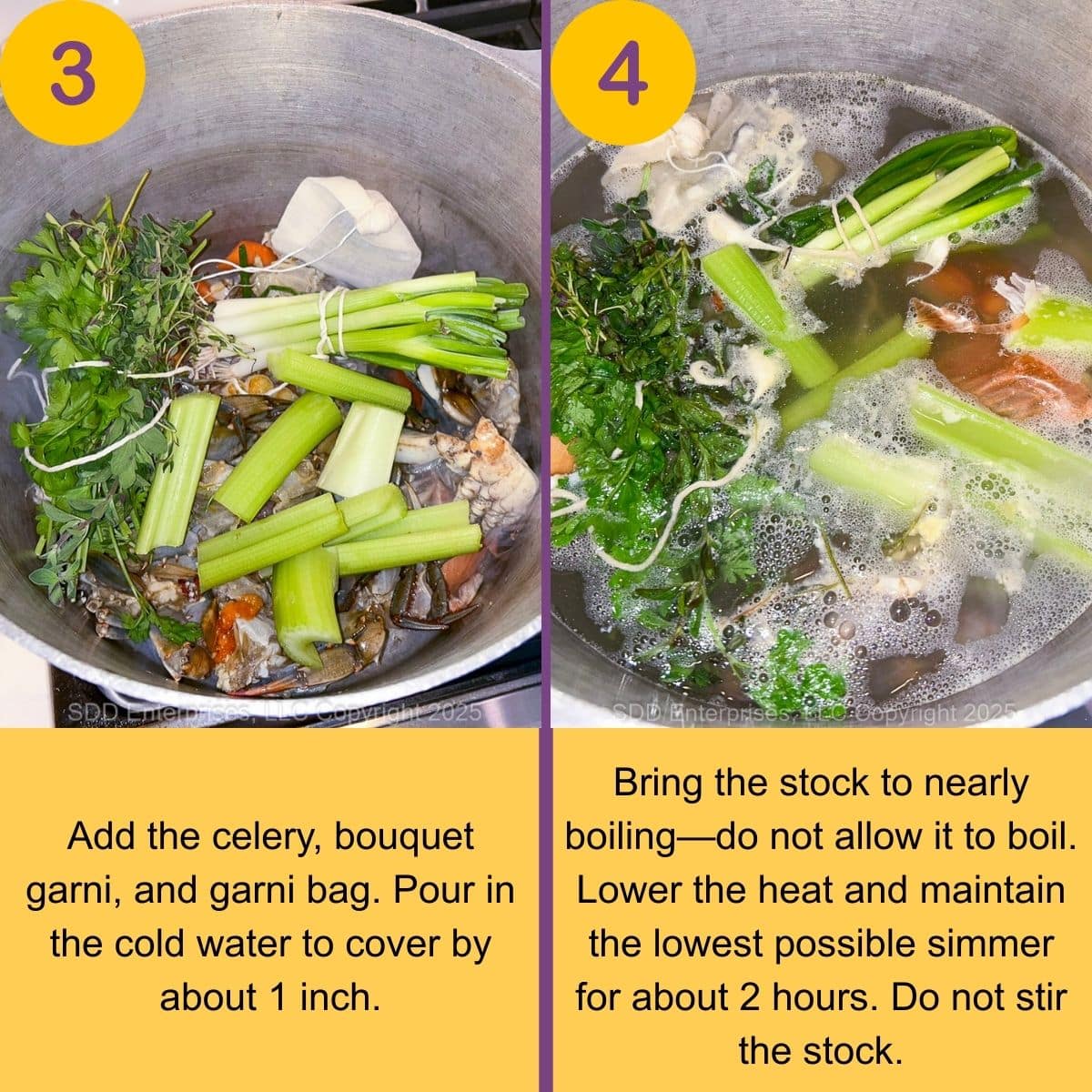
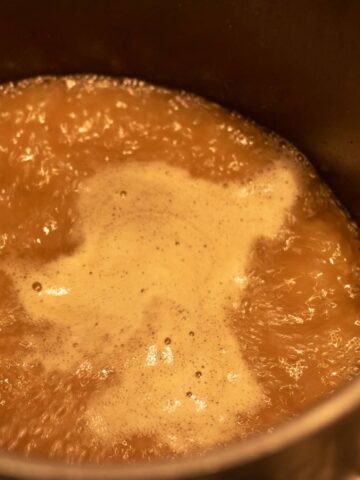
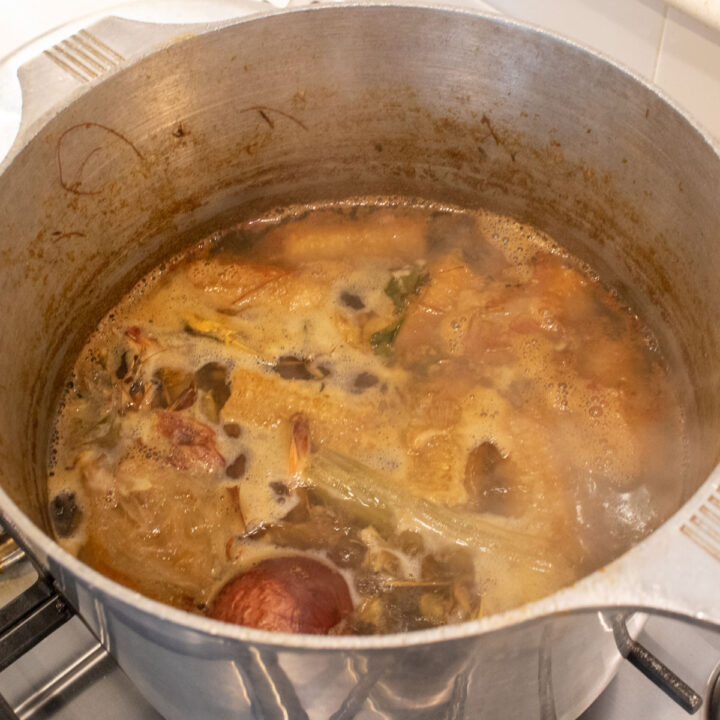
Lagniappe Tip: For the clearest, most flavorful stock, use quality ingredients, never boil your stock, and skim off any impurities that rise to the surface. The best practice is to maintain a gentle simmer by keeping the heat low, around 200°F, with only a few lazy bubbles breaking the surface.
Strain It!
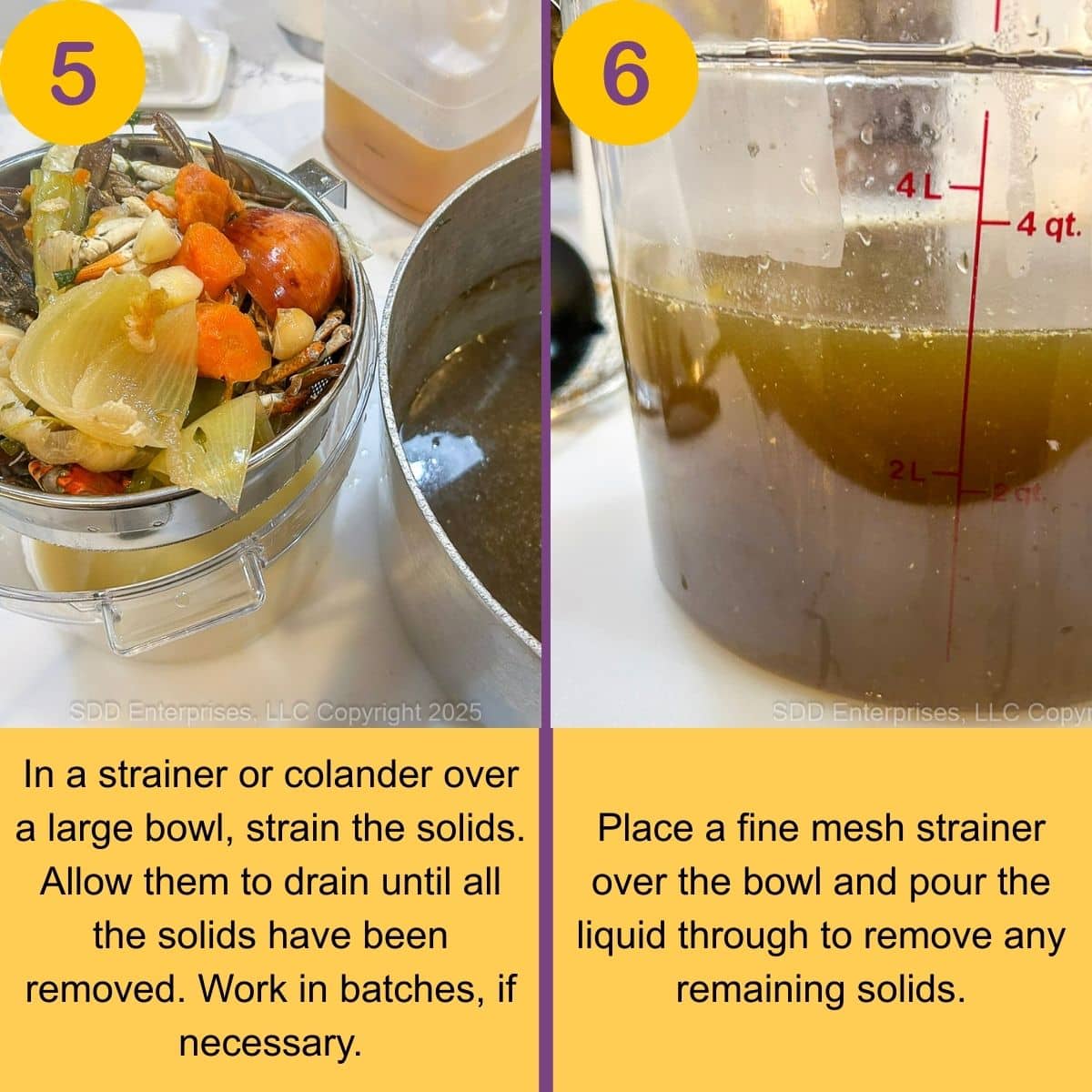
What happens in this step? Now we remove the spent veggies and aromatics.
Sign up for my email notifications of new recipes and posts right HERE.
Serving Suggestions
Homemade stock is the vehicle that delivers your gumbos, bisques, and soups; it's what makes your sauces stand out. It is also the flavor-packed cooking liquid for grits, rice, risotto, and pasta. For the home cook, it's your secret ingredient that makes your recipes stand out.
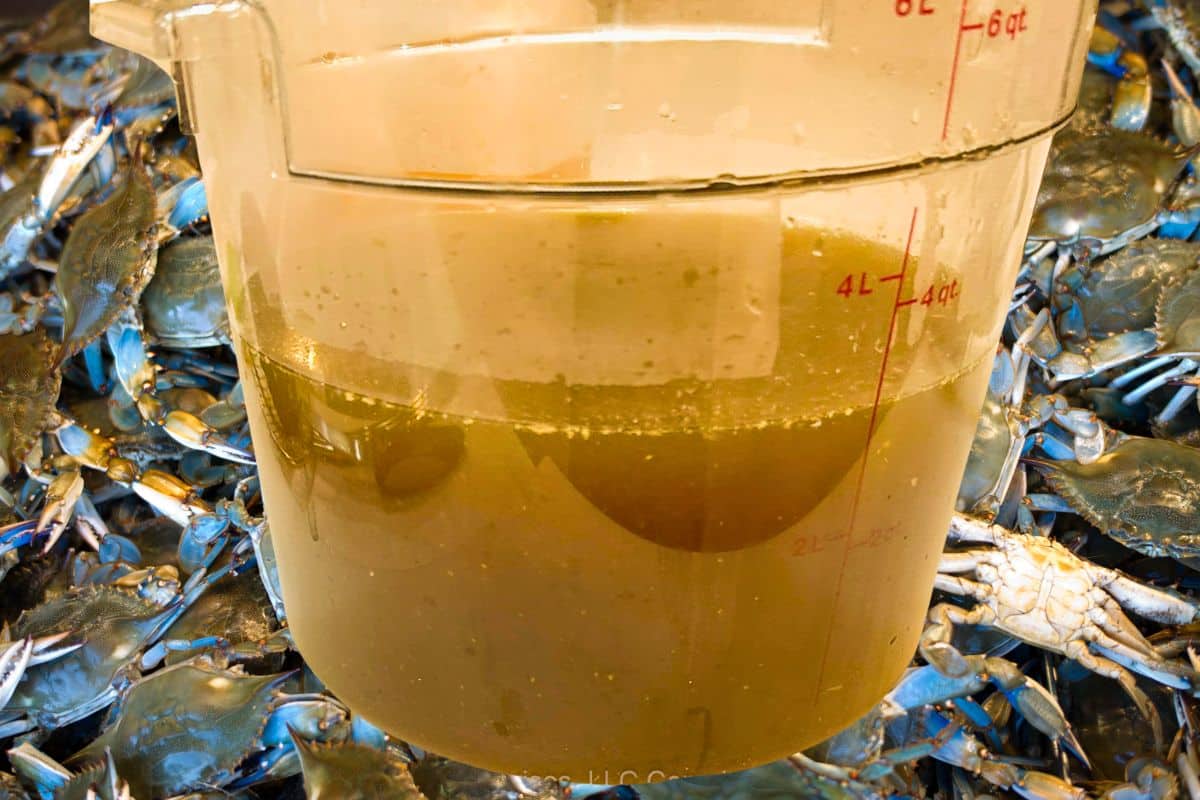
A Stock for Every Occasion
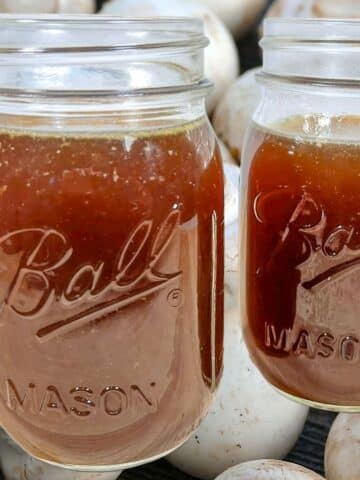
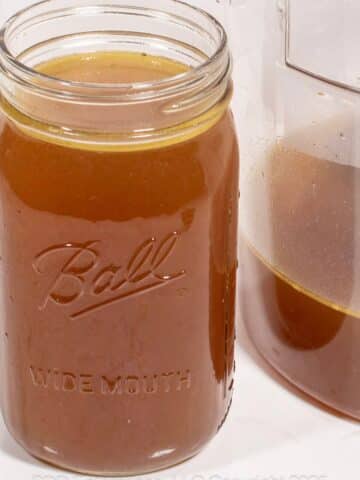

Storage Tips
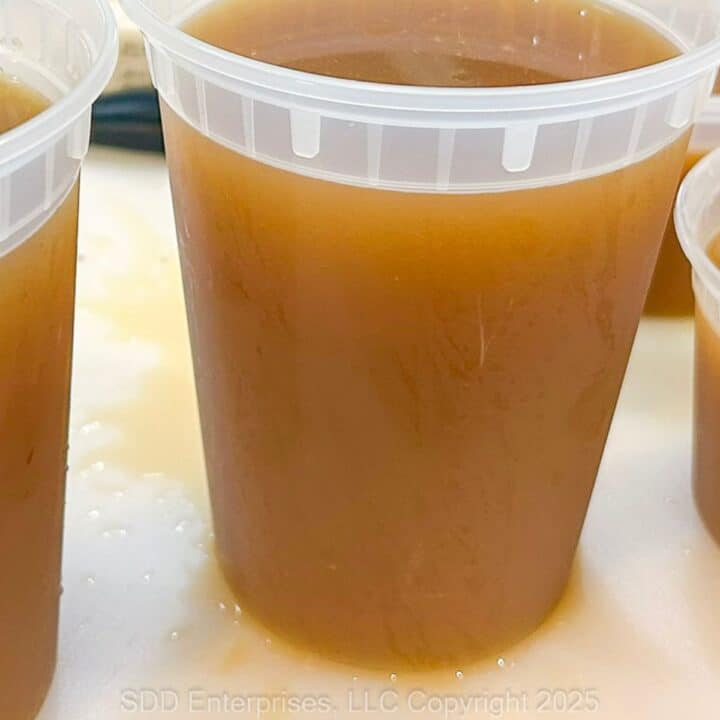
Homemade crab stock is a flavor-packed liquid that should be stored in a manner to preserve its clarity and flavor.
Useful Tips
- Cool the finished stock quickly and protect it from the air.
- Store it in useful portions (ice tray, 2-cup, 4-cup, and 8-cup).
- Use quality, freeze-safe containers.
- Wide containers make skimming off any solidified fat easy before use.
- Make sure to leave some headroom for expansion.
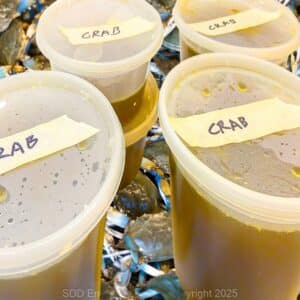
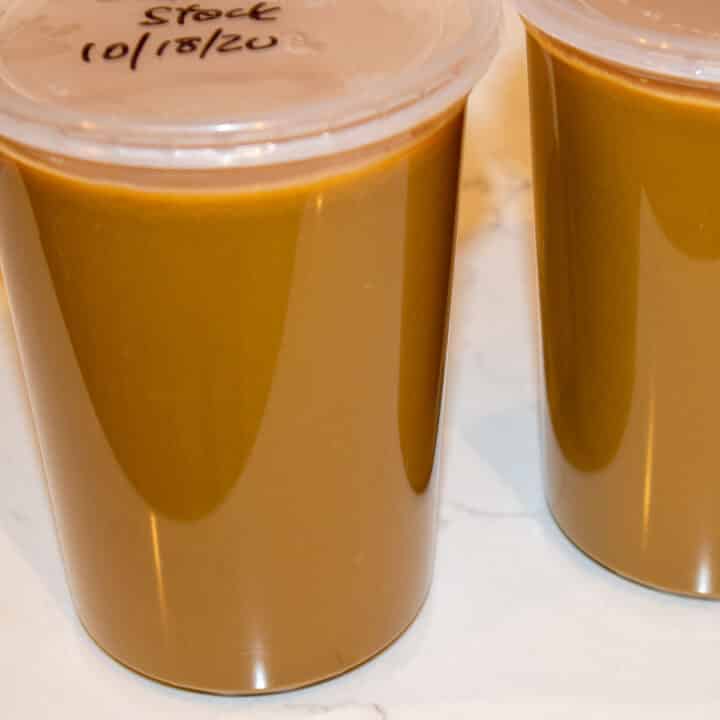
- Label the containers with contents and date.
Storage and Thawing
- Short-term: Let the stock cool completely, then refrigerate it in airtight containers for up to 2-3 days.
- Long-term: Freezing is best. Portion the cooled stock into measured amounts, then freeze for up to 6 months.
- Leave a little headspace in containers to allow for expansion.
- Ice cube trays or silicone freezer molds work well for small amounts when you only need a splash for sauces. Once frozen, transfer the cubes to labeled freezer bags to save space.
- When thawing, defrost overnight in the refrigerator and reheat gently-never boil-to preserve the clean crab flavor you worked to build.
Lagniappe Tip: Avoid storing stock warm, uncovered, or in thin containers that absorb odors.
Tell Us About It!
Tried this recipe? ⭐⭐⭐⭐⭐ Leave a 5-star rating and a comment below!
📧 Sign up for email updates so you never miss one.
📸 Share a pic on social and tag us-we'd love to see it!
Yeah You Right!
Recipe
Homemade Crab Stock
Here's What You Need
- 8 Gumbo Crabs See Notes
- 2 Tablespoons vegetable oil Optional
- 1 large onion quartered
- 3 carrots sliced into 3 to 4-inch lengths
- 3 stalks Celery with leaves
- 1 heads garlic sliced in half
- 1 bunch green onions tied in a bouquet garni.
- 1 bunch parsley tied in a bouquet garni.
- 4 quarts cold water
Herb and Spice Blend-Tied in a Bouguet Garni
- 1 ounce fresh thyme tied in a bouquet garni.
- 1 ounce fresh basil tied in a bouquet garni.
- 30 peppercorns in a garni bag
- 2 bay leaves in a garni bag
Here's What You Do
- Quarter the yellow onion. Chop the celery and carrots into short pieces. Tie the herbs parsley and green onions together in a Bouquet Garni; Place peppercorns and bay leaves in a small spice bag.
- Place a Dutch oven over medium-high heat; add vegetable oil. When the oil shimmers, add the onions, carrots, and garlic, cut sides down; lightly brown on the cut side only, about 5 minutes.
- Once the vegetables are seared slightly, add the gumbo crabs. Stir well and saute a few minutes until the shells have started to turn pinkish/red.
- Add the celery, bouquet garni, and the garni bag; add the cold water. The shells should be completely covered in water by about an inch.
- Place the stock pot over high heat and bring it up to almost a boil, with small bubbles forming at the edges. (See Notes)
- Lower the heat and maintain a very low simmer (occasional lazy bubbles only) for about 2 hours. Do not stir the mixture.
- From time to time, skim off any impurities that rise to the surface. Do not stir the stock, and do not stir the impurities back into the stock.
- Turn off the heat and allow the stock to cool so it will be easier to handle and the flavors continue to blend.
- Place a strainer or colander over a large bowl. Using a slotted spoon, place the solids into the strainer and allow them to drain until all the solids have been removed. Work in batches, if necessary.
- Discard all the solids and return the drained stock back into the stockpot.
- Place a fine mesh strainer, and pour the liquid through to remove any remaining solids. (See Notes)
- This can be used immediately or stored in the refrigerator for a couple of days.
- If the stock will not be used within a couple of days, place the strained stock in freezer containers, label and freeze for up to six months.
Recipe Notes
Nutrition Estimate

It's Me!
Louisiana is a wonderful place where the rich cultural heritage enriches and entertains. I'm Dave Howson, aka Sweet Daddy D. I'm glad you found my website and I look forward to exploring the cultural mosaic of Louisiana with you…
read the "It's Me" page to find out more about me and this website…
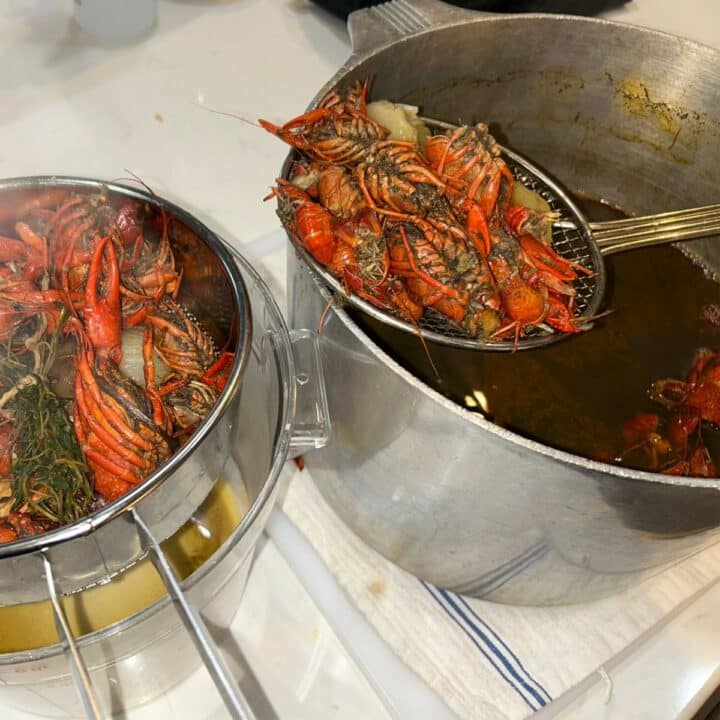
Sweet Daddy D says
This is an easy homemade stock recipe!