
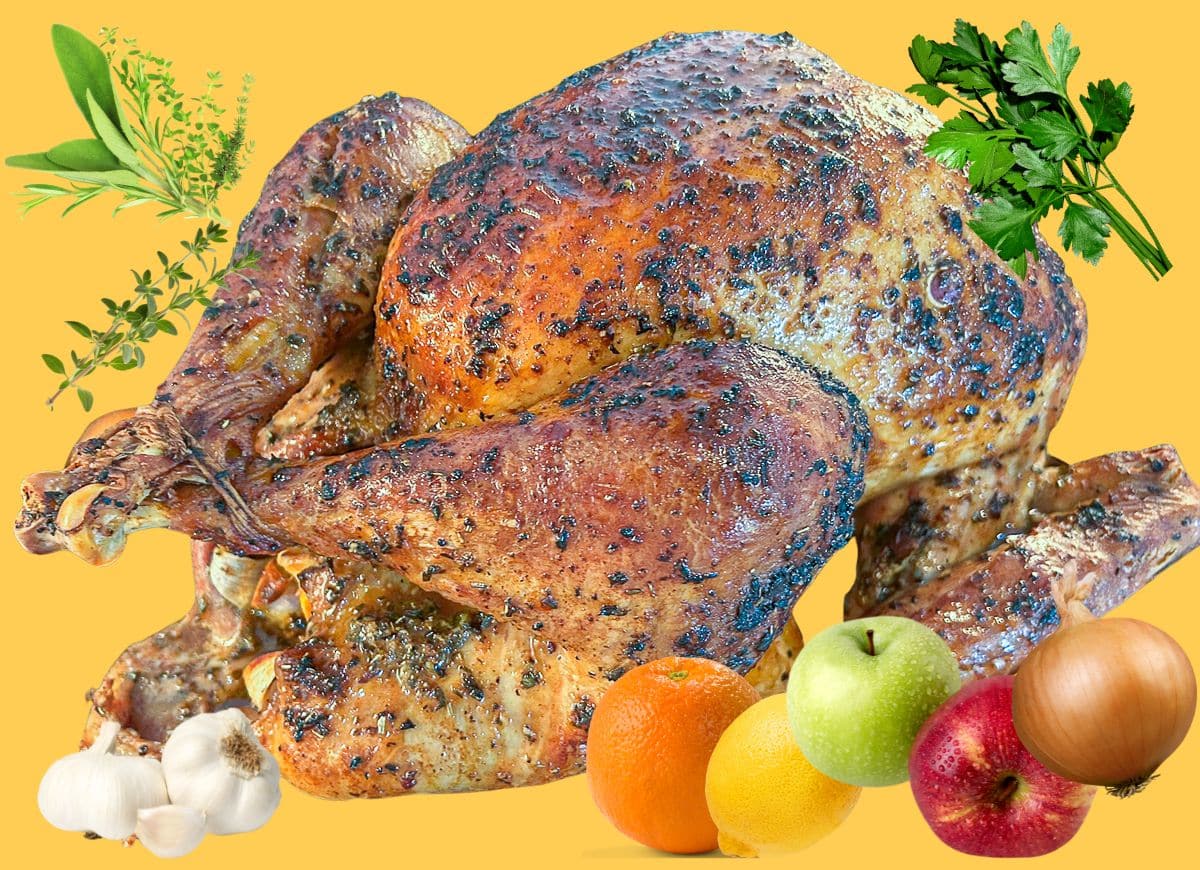
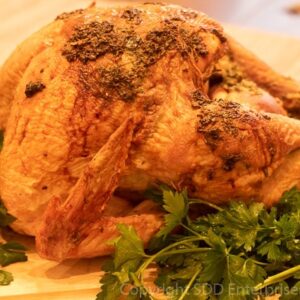
The centerpiece of the holiday table: Roast Turkey! You have to get this right, so here's Sweet Daddy D's no-angst preparation of Herb Roasted Turkey. It starts with a dry brine for moisture, a dry skin rest for browning and crispness, and the unforgettable holiday flavor derived from fresh herbs and lots of butter. Follow this method and you'll deliver a beautifully cooked turkey that steals the show every single time.
This post is not sponsored, but you will find affiliate links on this page. As an Amazon Associate, I earn from qualifying purchases. The price you pay as a consumer does not change, but I may make a small commission based on your purchase.
Jump to:
Why This Recipe Works for Every Level of Cook
This Herb Roasted Turkey gives first-time cooks a calm, step-by-step roadmap-dry brine, naked rest, herb butter, gentle roasting-that takes the anxiety out of preparing the holiday centerpiece. Experienced cooks will appreciate the solid technique behind each phase; every step contributes directly to juicy meat and crisp, golden skin. The flavor profile is endlessly flexible-adjust the mix of fresh herbs to keep it classic, brighten it up, or shift toward deeper, earthier notes. This recipe balances simplicity with sound kitchen science, delivering reliable results for cooks at every skill level.
Sign up for my email notifications of new recipes and posts right HERE.
Here's What You Need
These are the key ingredients used in this recipe. A complete list, with quantities, is included in the printable recipe card at the end of this article.
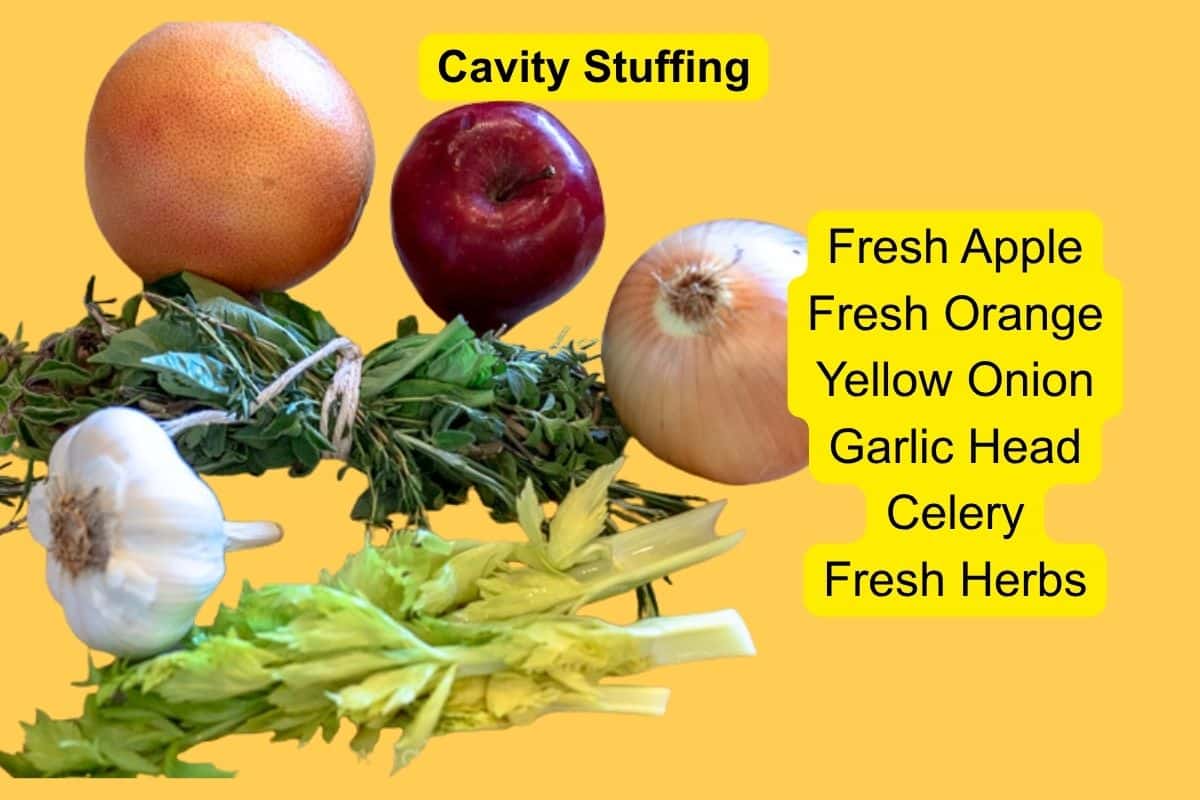
Ingredient Notes
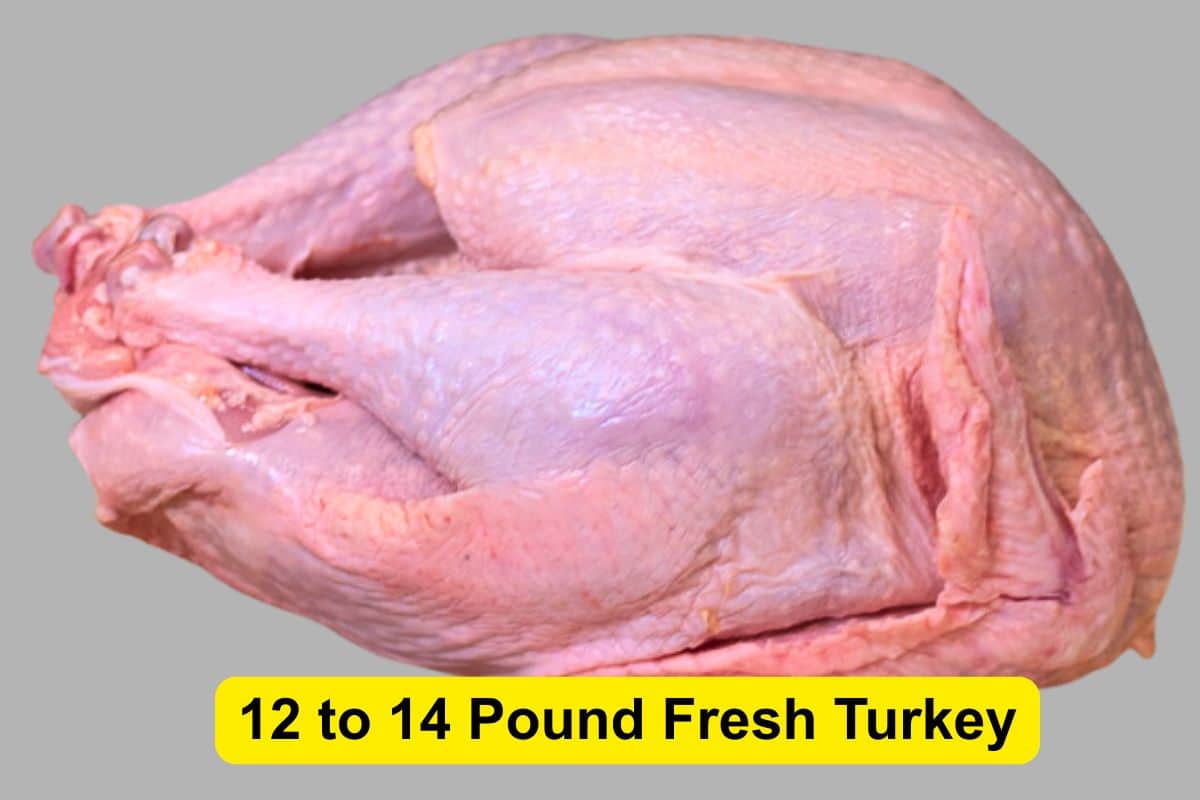
- Turkey: A 12-14 pound fresh turkey works beautifully, but any size will do-just adjust brine time and roasting time for the weight. Frozen turkeys are fine as long as they're fully thawed in the refrigerator (never on the counter).
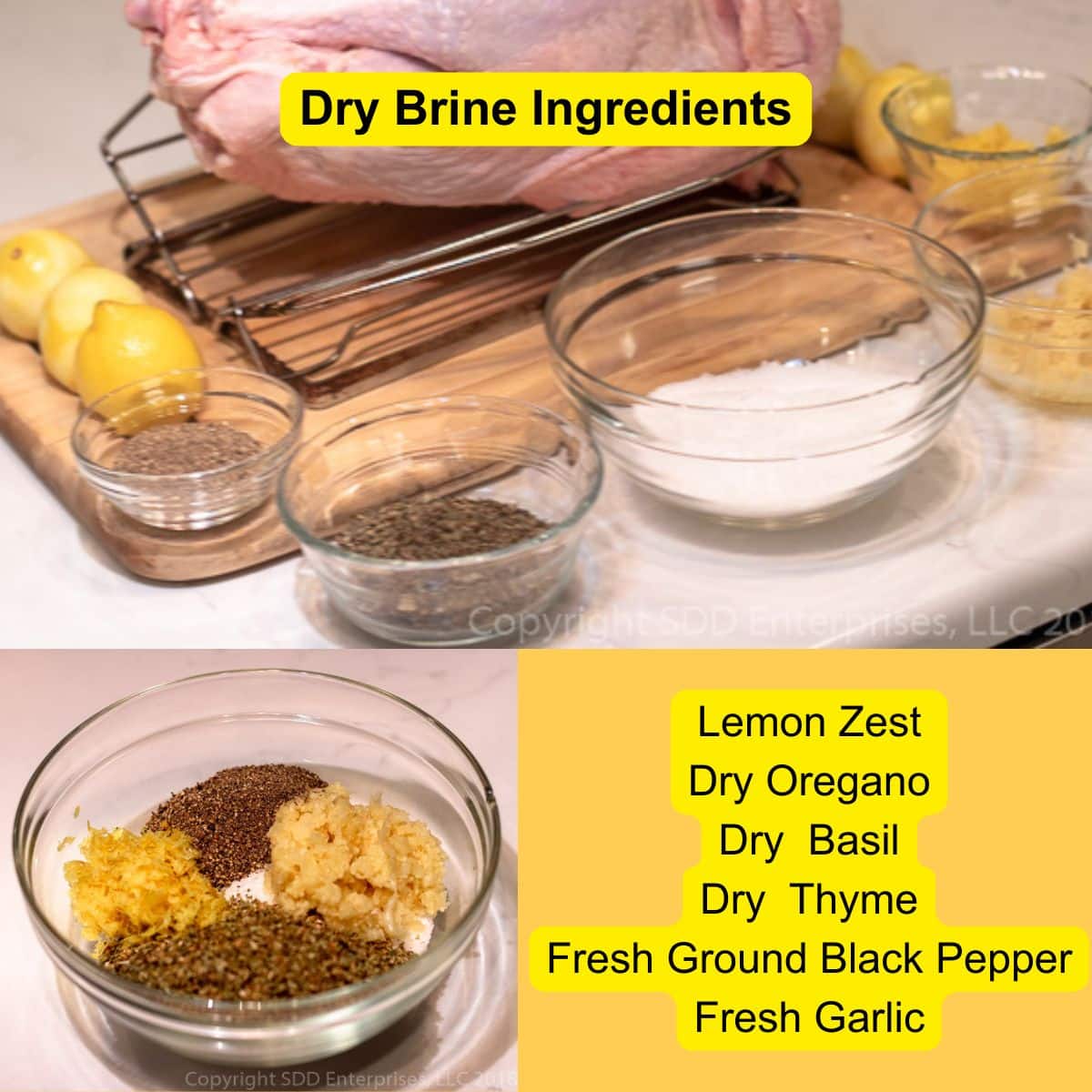
- Kosher Salt (for Dry Brine): Preferred for its larger flakes and clean flavor. It seasons evenly without making the turkey too salty.
- Dried Herbs (for Dry Brine): Oregano, basil, thyme, and freshly ground black pepper add depth and aroma. Dried herbs work best at this stage because they stand up to the long brine.
- Garlic and Lemon Zest: Fresh garlic and zest brighten the dry brine and help carry flavor into the meat.
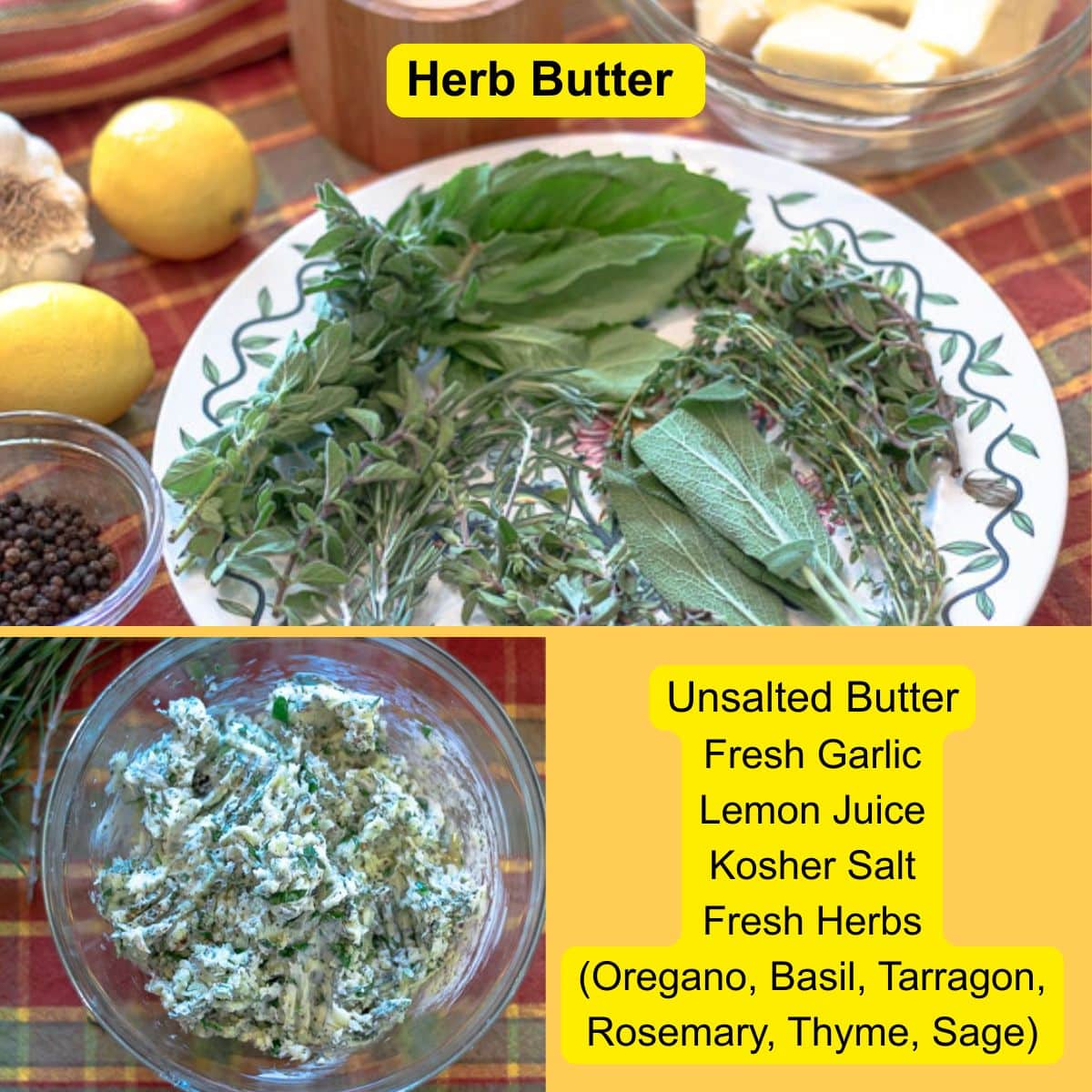
- Butter (for Herb Butter Paste): Use very soft butter so it spreads easily under the skin. Salted or unsalted both work.
- Fresh Herbs: Oregano, basil, tarragon, rosemary, thyme, and sage give the turkey its signature holiday aroma. Use what you have-this recipe is flexible.
- Aromatics for the Cavity: Apples, oranges, onions, garlic, celery, and fresh herbs add moisture and fragrance. These are for flavor only and are not meant to be eaten (these are discarded after cooking).
Substitutions
Substituting ingredients is sometimes desirable or necessary, but keep in mind that any substitution may impact the flavor profile, cooking time, or nutrition.
- Salt: If using table salt instead of kosher, reduce the amount by half-it's denser and saltier.
- Garlic: Substitute ½ teaspoon granulated garlic for every 2-3 cloves of fresh garlic.
- Lemon Zest / Lemon Juice: Use lemon pepper (sparingly) or a splash of white wine vinegar if lemons aren't available.
- Dried Herbs: Swap thyme for marjoram, basil for parsley, or add savory for a more herbal flavor. Dried herbs can replace fresh herbs in the Herb Butter at a ratio of 1 teaspoon dried = 1 tablespoon fresh.
- Butter: Salted butter is fine-just reduce added salt in the Herb Butter. For dairy-sensitive cooks, use a high-quality plant-based butter that softens easily.
- Aromatics: Pears can replace apples, limes can replace oranges, and fennel or green onions can stand in for celery.
Cookware
A few reliable pieces of cookware make this recipe much easier: a sturdy roasting pan with a rack for even browning, an instant-read thermometer to check doneness, and kitchen twine for securing the herb bundle. A large cutting board, a sharp knife, and a couple of small mixing bowls help with prep, while plenty of paper towels ensure the turkey is thoroughly dried for crisp, golden skin.

Tips For a Safe, Delicious, and Juicy Turkey
- For safe handling, thawing, and cooking guidelines, be sure to review the US Department of Agriculture's (USDA) official recommendations on turkey food safety.
- Give yourself enough time-this recipe includes brining and drying steps that must be done in advance.
- Start with a fully thawed turkey-this can take several days in the refrigerator.
- Dry brining works best when the turkey is very dry before the salt goes on.
- Don't rush the naked rest-dry skin is the key to crisp, golden skin.
- Keep the Herb Butter soft (not melted) so it spreads easily under the skin.
- Use an instant-read thermometer-doneness is about temperature, not time.
- If the turkey browns too fast, tent it loosely with foil.
- Let the turkey rest before carving so the juices stay in the meat.
Hints and Tips (FAQ)
No. Keep the turkey cold at all times until it goes in the oven. Dry brining works perfectly on a cold bird, and it's safer.
The first drying helps the dry brine stick. The second drying removes extra salt and allows the skin to air-dry, which is what makes it crisp during roasting.
Slide your hand under the skin of the breast to create a pocket. This lets you spread Herb Butter where it melts into the meat and adds flavor and moisture.
Use an instant-read thermometer. The breast should reach 160-165°F, and the thigh 170-175°F. Doneness is about temperature, not time.
Tent it loosely with aluminum foil. The turkey will continue cooking without darkening further. Covering the wing tips with foil will also keep them from burning-they tend to darken faster than the rest of the bird.
No. It's for flavor and moisture only. Discard it after roasting.
How Long Will It Take For My Turkey to Cook?
The actual roasting time will depend upon the size of the turkey and the oven temperature. At 325°F, it should take 13 to 15 minutes per pound. Butterball has a great calculator for cooking times, defrosting times, and what size turkey you need. Check it out here!
Here's What You Do
First…you have a beer. That's the secret to no-angst cooking-fun, relaxed, and rewarding. Sip while you read the recipe from start to finish. Then perform your mise en place: gather your ingredients, prep them as they'll be used, and set out your equipment. With everything in place and your mindset right, you're ready to cook with confidence and enjoy the process as much as the meal.
Mise En Place
No-angst cooking continues with mise en place. Before you ever turn on the heat, prep and measure every ingredient exactly as it will be used (chopped, diced, sliced, or minced). When everything's ready to go, most of the work is behind you-and the cooking becomes simple, seamless, and enjoyable.
- Mix the Dry Brine.
- Mix the Herb-Butter Paste.
- Tie the fresh herbs into a bouquet garni.
- Cut the apple, orange, onion, and garlic.
- Set up the roasting pan and rack.
- Gather paper towels, kitchen twine, and your thermometer.
Lagniappe Tip: If you're starting with a frozen turkey, give yourself plenty of time to thaw it safely in the refrigerator-this can take several days for a large bird. And don't forget to set your butter out early so it's soft enough to mix and spread when you need it.
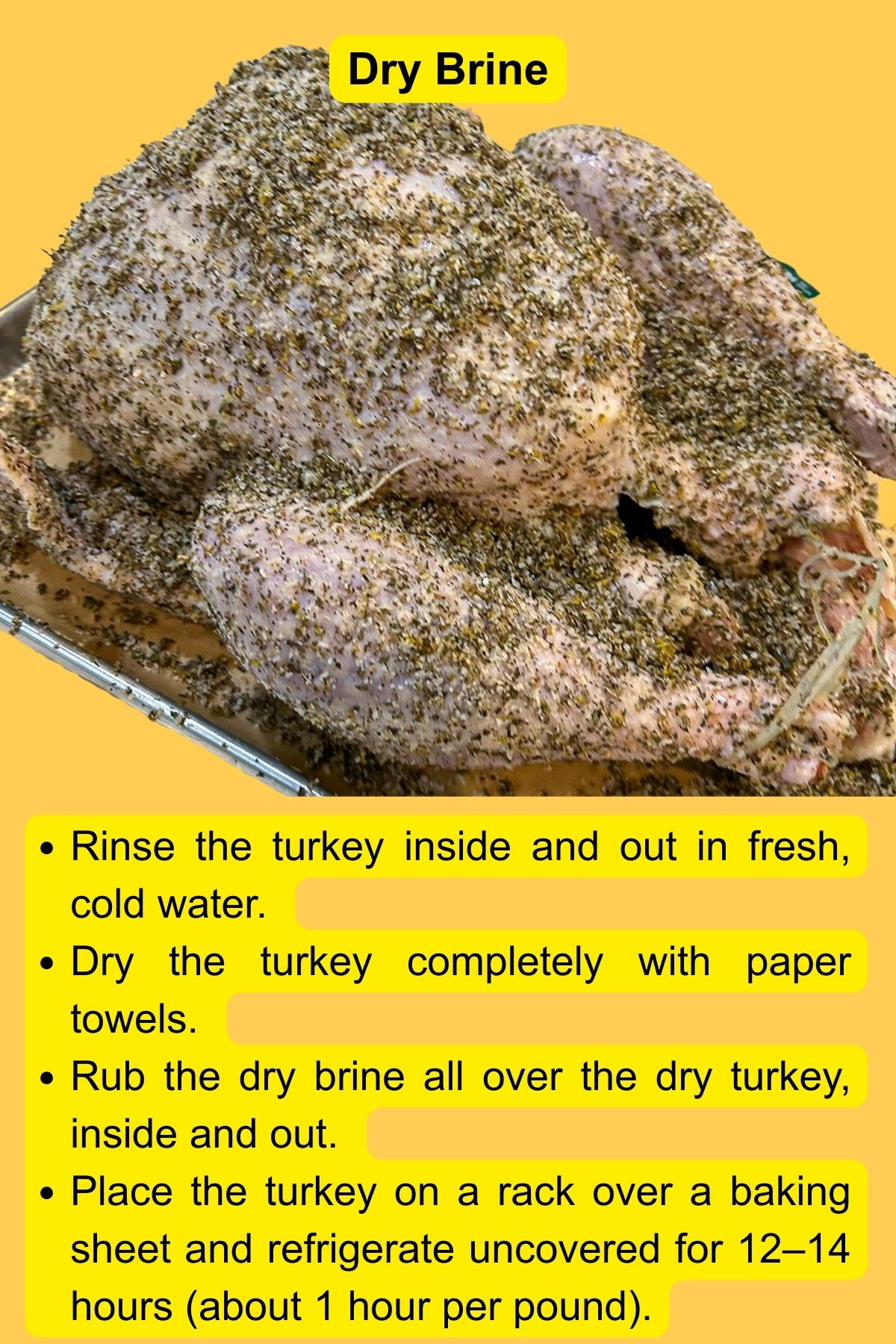
Dry Brine
What happens in this step? This step seasons the meat all the way through and draws moisture to the surface, where the salt dissolves and then reabsorbs for juicier, more flavorful turkey. It also begins tightening the skin so it browns better later.
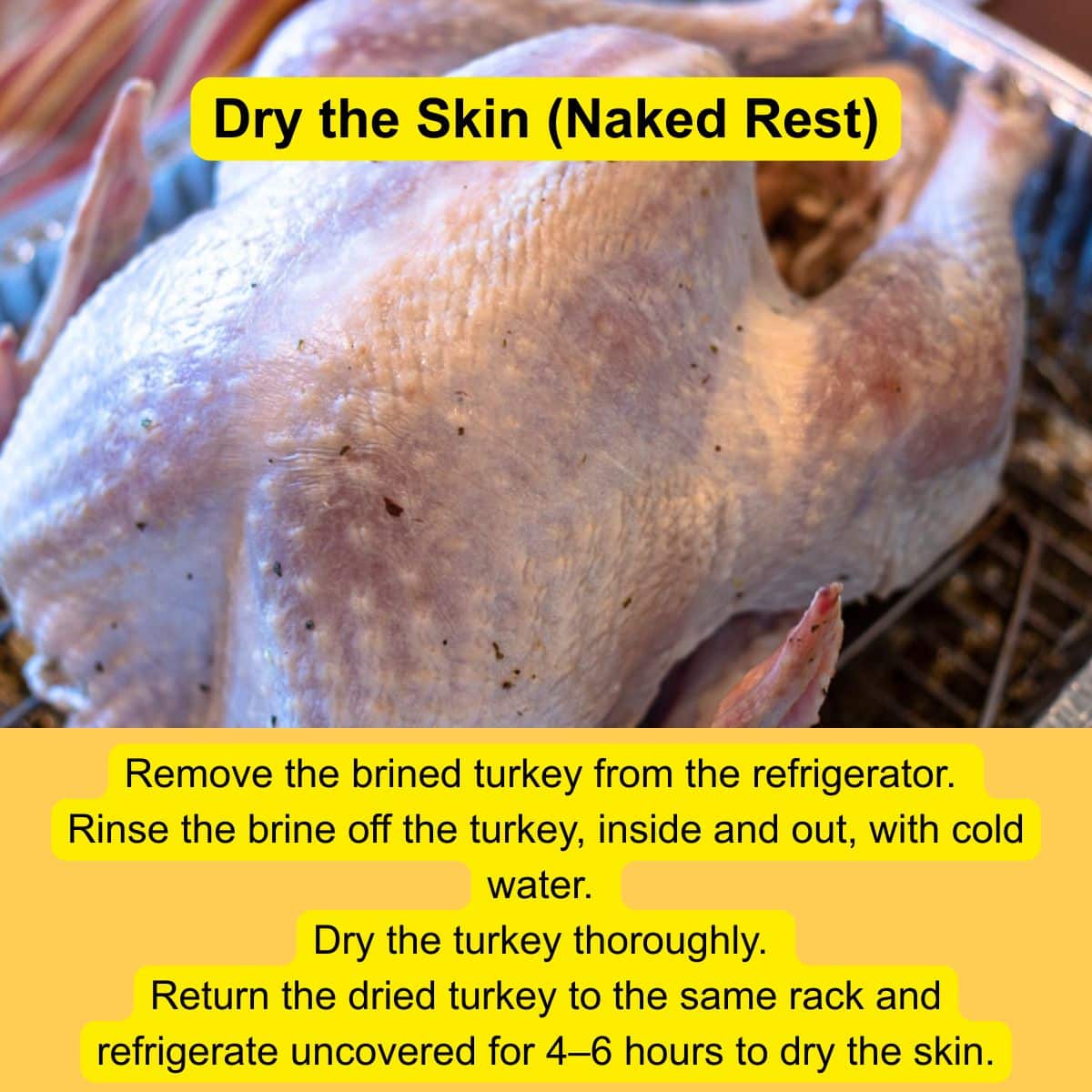
Dry the Skin (Naked Rest)
What happens in this step? The turkey sits uncovered in the refrigerator so the skin can dry completely. Dry skin is the secret to deep browning and crisp, golden skin during roasting.
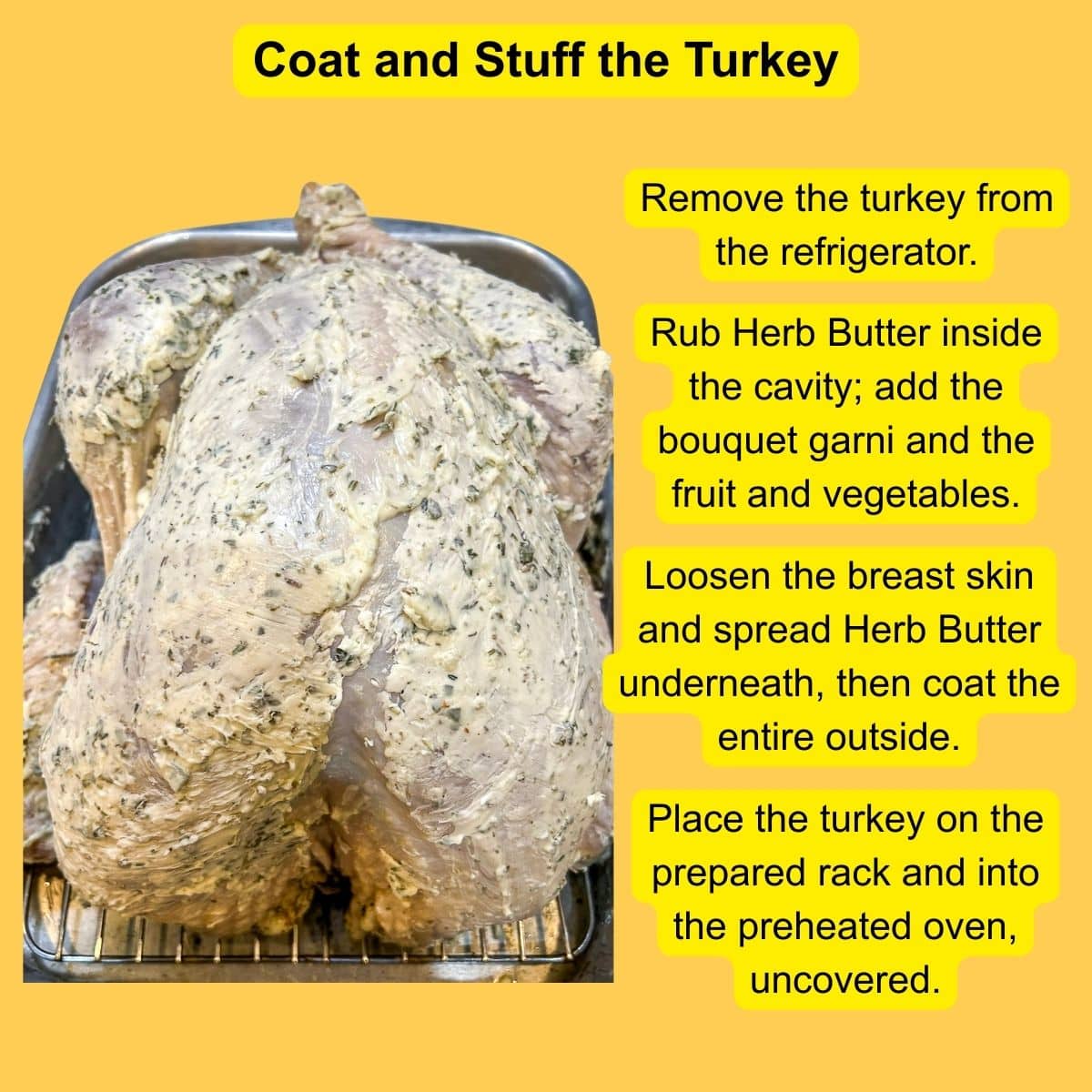
Coat in Butter and Stuff the Cavity
What happens in this step? Herb Butter is rubbed inside the cavity, under the breast skin, and over the outside of the turkey, where it melts and self-bastes the bird as it cooks. The fruit, vegetables, and fresh herbs inside the cavity add moisture and aroma without weighing down the meat.
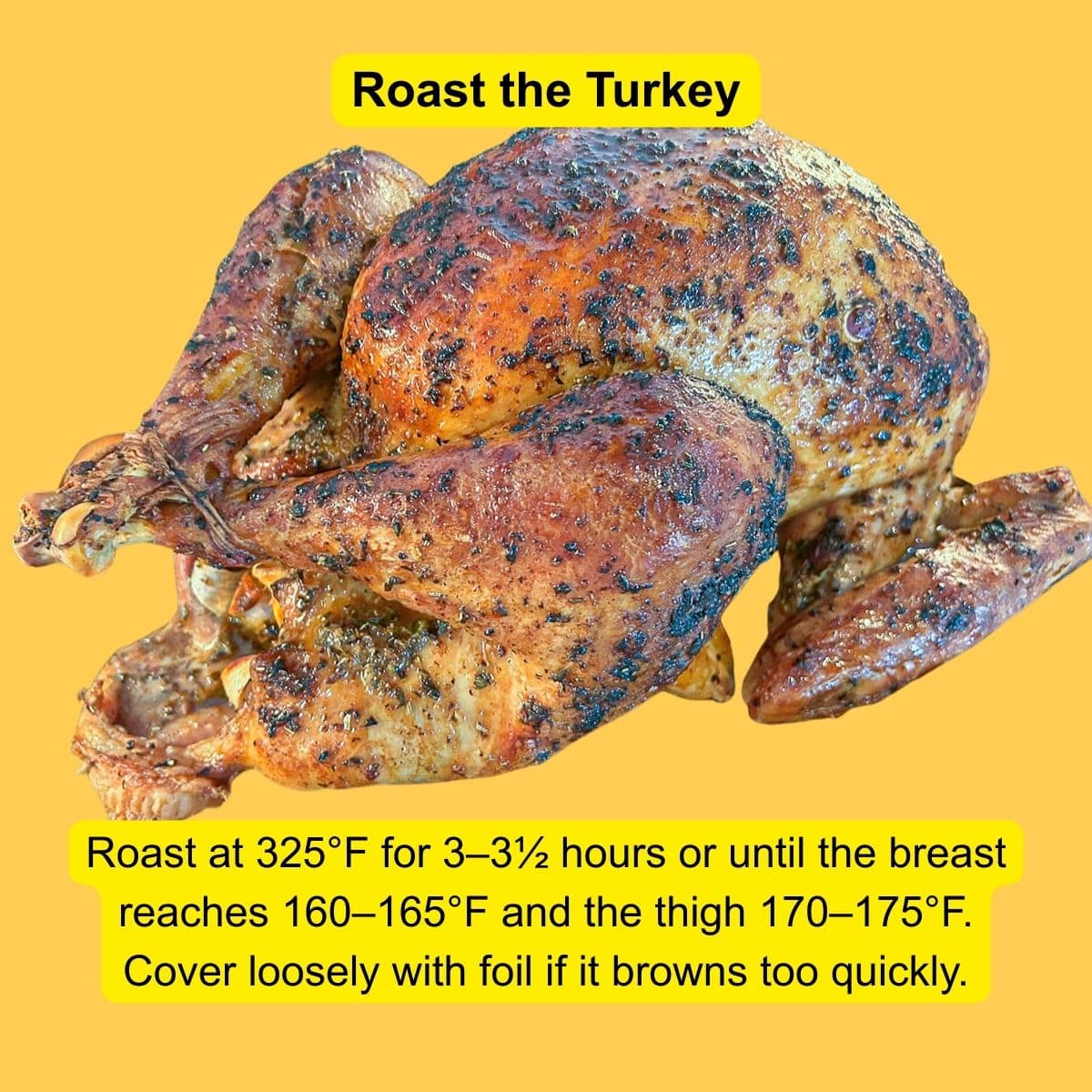
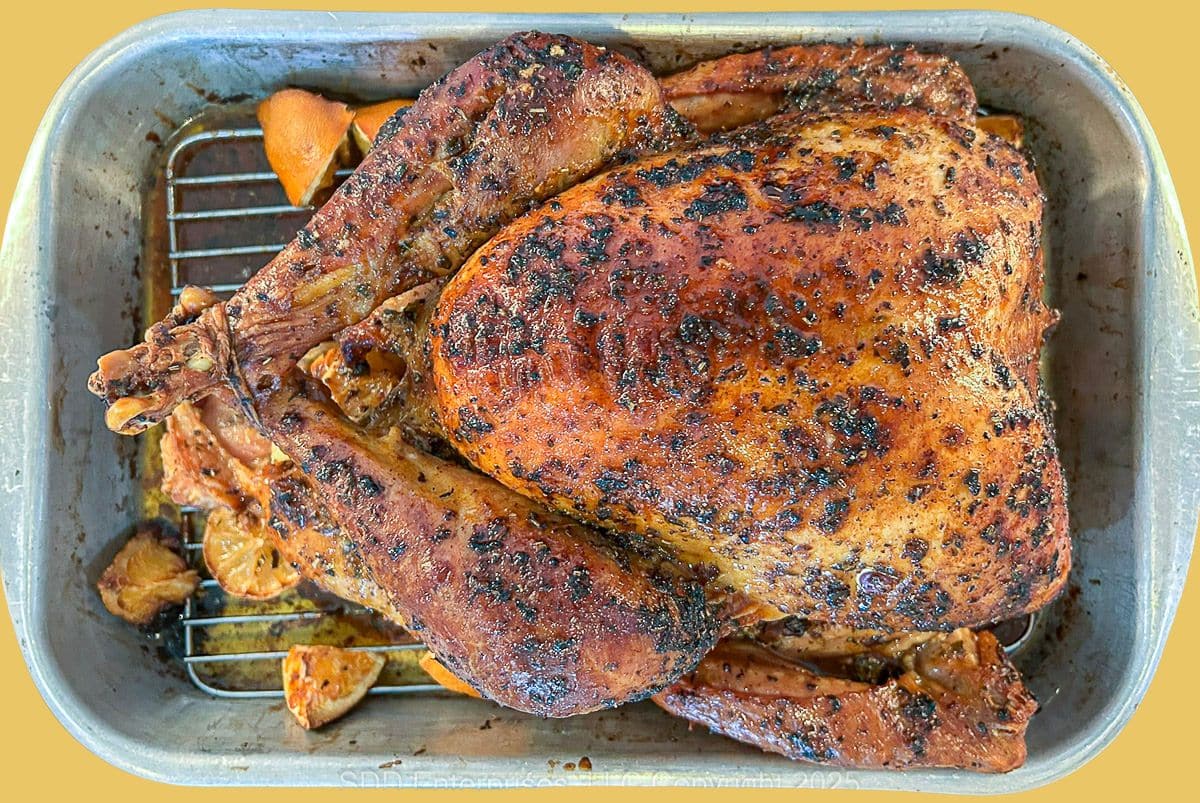
Roast the Turkey
What happens in this step? The turkey roasts gently at 325°F until it reaches the correct internal temperature. As it cooks, the Herb Butter melts through the meat while the dry skin turns crisp and golden.
Serving Suggestions
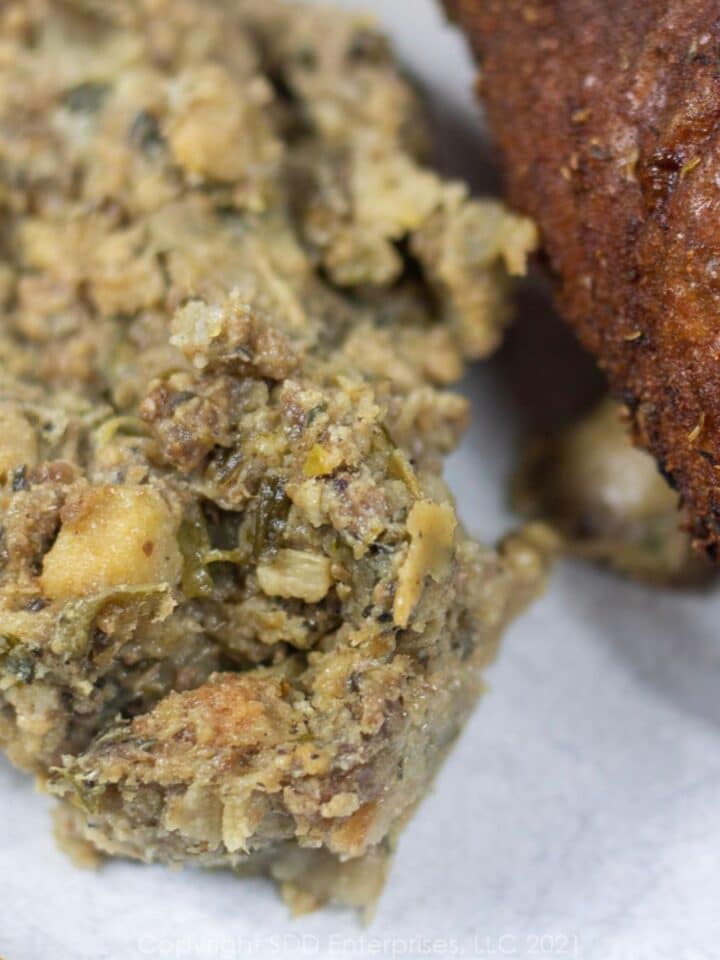
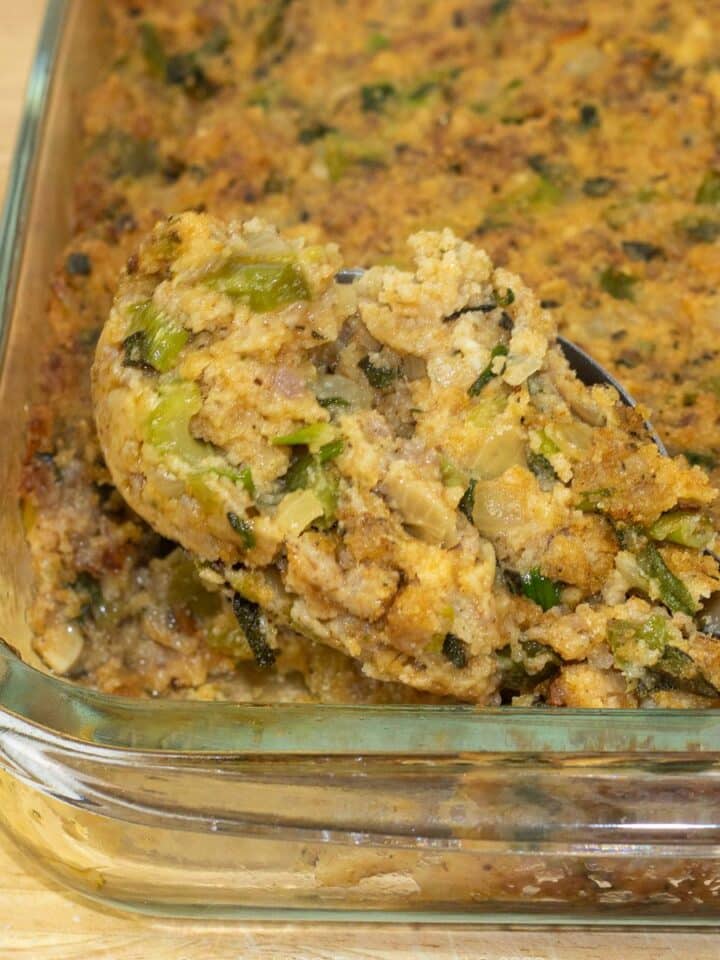
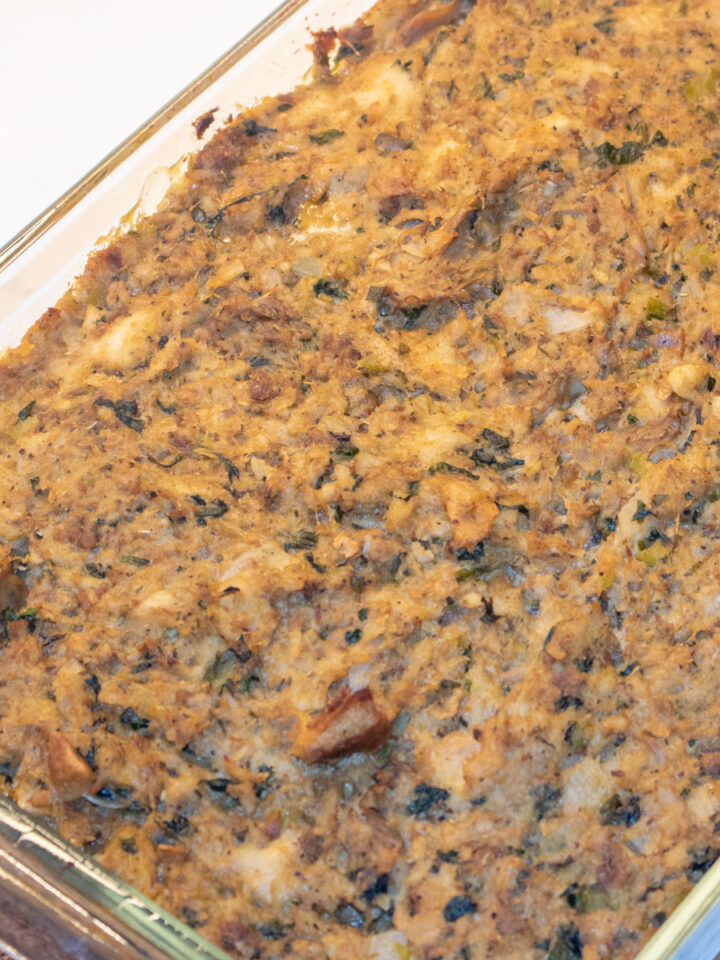
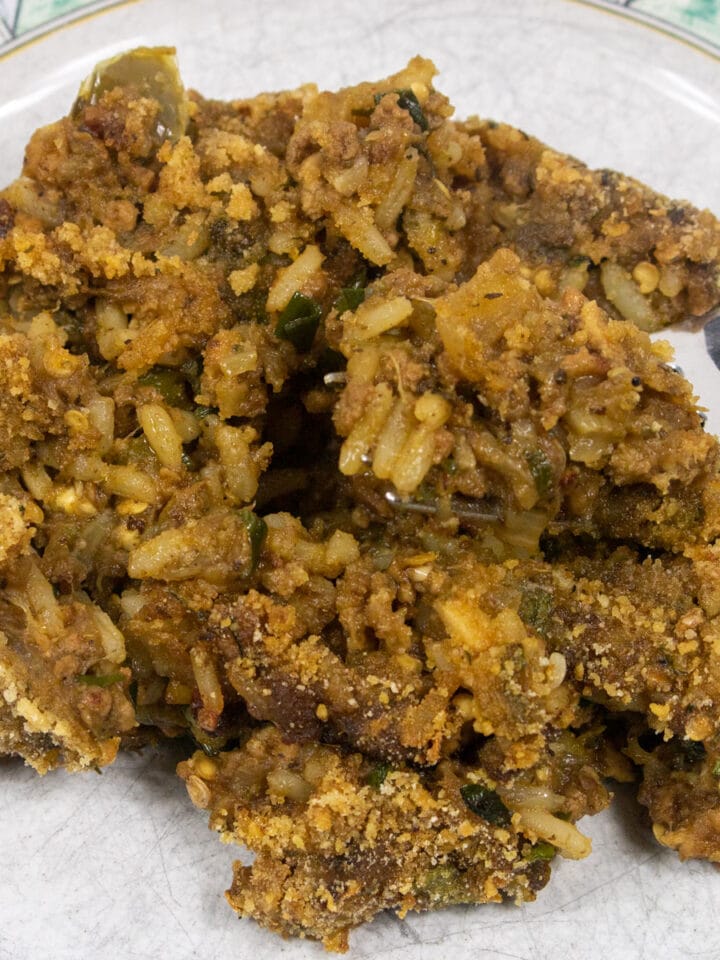
Carve the turkey and serve with the classic holiday crew-cornbread dressing, sweet potatoes, green beans, and hot gravy. The herb and citrus notes pair especially well with Pecan Rice, Garlic Mashed Potatoes, cranberry relish, or a simple salad with a citrus vinaigrette. For a Louisiana table, smothered cabbage, dirty rice, and maque choux all make excellent additions.
Leftover Tips
Leftover turkey keeps 3-4 days in the refrigerator or up to 3 months in the freezer.
- Remove the meat from the bones as soon as the first round of leftovers is finished.
- Store the meat in airtight containers.
- If you want your leftover turkey warm, gently reheat it in a saucepan with a splash of stock or gravy to keep it moist, or warm it in foil in a 325°F oven.
Uses for leftover turkey are limited only by your imagination.
- Don't toss the carcass-it makes excellent turkey stock for gumbo or soup.
- My No. 1 leftover use of the meat is Turkey and Oyster Gumbo.
- Another leftover treat is a Turkey Pot Pie with Puff Pastry.
- A turkey sandwich is a category all by itself. Sliced turkey with mayonnaise and sweet relish is one of my favorites, but go full Cresent City and get some PoBoy bread, slather on mayo, sliced turkey, leftover oyster dressing, and a little (or a lot) of Cranberry Relish. That's a holiday treat that's hard to beat!
Tell Us About It!
Tried this recipe? ⭐⭐⭐⭐⭐ Leave a 5-star rating and a comment below!
📧 Sign up for email updates so you never miss one.
📸 Share a pic on social and tag us-we'd love to see it!
Yeah You Right!
Publisher's Note: This article was originally published in November 2018 and has been updated with clearer steps, new photos, and improved guidance to help cooks of all experience levels prepare a reliably delicious Herb Roasted Turkey. The recipe has not been changed.
Recipe
Herb Roasted Turkey
Here's What You Need
- 12-14 pound fresh turkey
For the Dry Brine
- ⅔ cup kosher salt
- 2 tablespoons lemon zest
- 2 tablespoons dry oregano leaves
- 2 tablespoons dry basil leaves
- 1 tablespoon dry thyme leaves
- 2 tablespoons ground fresh black pepper
- 10 cloves garlic pressed
For the Herb Butter Paste
- 16 Tablespoons Butter 2 stick-very soft but not melted
- 5-6 cloves garlic pressed
- 1 teaspoon kosher salt
- Juice of 1 Lemon
- 1 tablespoon each of these fresh herbs: Oregano, Tarragon, Rosemary, Thyme, Sage. Remove from the stem and chop finely; use more or less of each according to your taste
For Stuffing the Cavity
- 1 quartered Apple
- 1 quartered yellow onion
- 1 quartered orange
- 1 head garlic sliced in half
- Sprigs of fresh herbs (for bouquet garni), tied together
Here's What You Do
Dry Brining
- Mix all Dry Brine ingredients in a small bowl and set aside.
- Remove the giblets and set aside; reserve for another use. Rinse the turkey gently inside and out with cold water (avoid splashing), then dry it completely with paper towels.
- Rub the dry brine generously over the inside and outside of the turkey. Place the turkey on a rack set over a baking sheet and refrigerate uncovered for 12-14 hours (about 1 hour per pound).
- Rinse off the dry brine thoroughly and dry the turkey very well. Return it to the rack and refrigerate uncovered for 4-6 hours to dry the skin.
Prep the Herb Butter & Aromatics
- Mix the Herb-Butter Paste ingredients in a bowl; the butter should be very soft.
- Tie the leftover fresh herb sprigs into a bouquet garni.
- Cut the apple, orange, onion, and garlic for stuffing.
- Remove the turkey from the refrigerator for stuffing.
Coat and Stuff the Turkey
- Rub some of the Herb Butter inside the cavity. Add the bouquet garni, then pack in the fruit and vegetables.
- Gently loosen the skin over the breast with your hand. Spread Herb Butter under the skin, then coat the entire outside of the turkey, leaving a thick layer on top.
Roast the Turkey
- Preheat the oven to 325°F.
- Spray a roasting rack and pan with nonstick spray. Place the turkey on the rack.
- Roast for 3-3½ hours, or until the breast reaches 160-165°F and the thigh 170-175°F. Tent loosely with foil if it browns too quickly.
- Let the turkey rest for about 20 minutes before carving.
Recipe Notes
Dry brining works best when the turkey is very dry. Pat it thoroughly with paper towels before applying the dry brine.
Don’t skip the “naked rest.” Leaving the turkey uncovered in the fridge dries the skin, which helps it brown and crisp in the oven.
The Herb Butter should be soft but not melted. Soft butter spreads easily under the skin and clings to the outside of the turkey.
Use the cavity aromatics only for flavor. The herbs, fruit, and vegetables help keep the turkey moist but aren’t meant to be eaten afterward.
Use an instant-read thermometer to check doneness: the breast should reach 160–165°F and the thigh 170–175°F.
If the turkey browns too quickly, tent it loosely with foil. This protects the skin without slowing the cooking too much.
Let the turkey rest before carving. A 20-minute rest helps the juices settle so the meat stays moist. Save the carcass! It makes excellent turkey stock for gumbo, soup, or rice dressing.
Nutrition Estimate

It's Me!
Louisiana is a wonderful place where the rich cultural heritage enriches and entertains. I'm Dave Howson, aka Sweet Daddy D. I'm glad you found my website and I look forward to exploring the cultural mosaic of Louisiana with you…
read the "It's Me" page to find out more about me and this website…
Sweet Daddy D says
This is your Thanksgiving Turkey!