
Turn leftover crawfish shells into a rich homemade stock that adds authentic South Louisiana flavor to étouffée, bisque, gumbo, and countless Cajun and Creole favorites. With just a few simple techniques, you'll create a cleaner, richer, and more flavorful stock every time.
This post is not sponsored, but you will find affiliate links on this page. As an Amazon Associate, I earn from qualifying purchases. The price you pay as a consumer does not change, but I may make a small commission based on your purchase.
Jump to:
Keys to a Great Crawfish Stock
Making a great crawfish stock comes down to a handful of simple techniques and ingredient choices, but creating the perfect stock is also a journey of skill and experience. With practice, you'll learn how each step influences the final flavor, helping you produce richer, cleaner, and more balanced stocks every time.
- Use shells and claws leftover from a crawfish boil, but skip the boiled vegetables.
- Start with fresh, clean vegetables free of soft spots, browning, or decay.
- Choose mild-flavored aromatics that support rather than overpower the crawfish.
- Using cold water slowly extracts flavor from the ingredients.
- Maintain a gentle simmer, never a rolling boil.
- Skim impurities regularly to keep the stock cleaner and clearer.
- Avoid stirring, which can cloud the stock and muddy the flavor.
- Simmer long enough to extract flavor without developing bitterness-at least 1 hour and no more than 2 hours.
- Add little or no salt, allowing the finished dish to be seasoned properly.
- Strain thoroughly to produce a clean, flavorful stock.
Sign up for my email notifications of new recipes and posts right HERE.
Sign up for my email notifications of new recipes and posts right HERE.
Here's What You Need
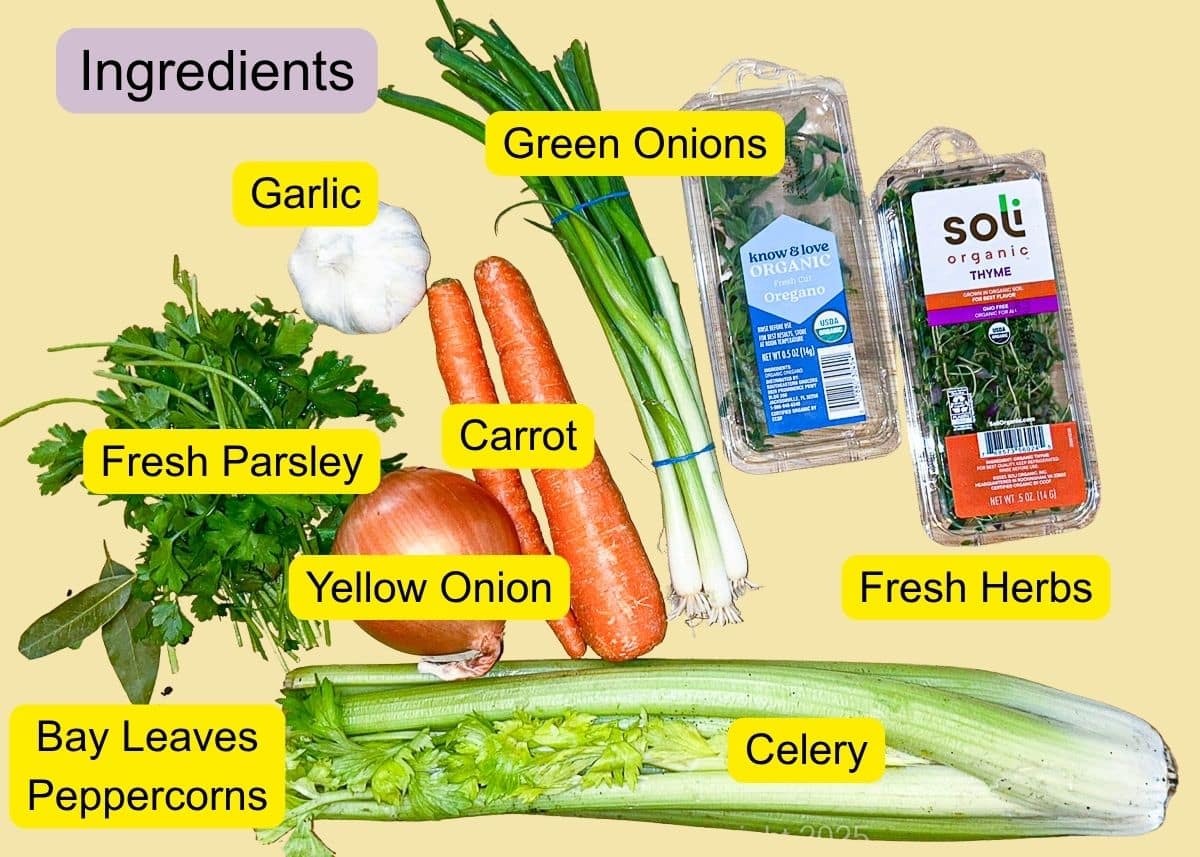
These are the key ingredients used in this recipe. A complete list, with quantities, is included in the printable recipe card at the end of this article.
Ingredient Notes
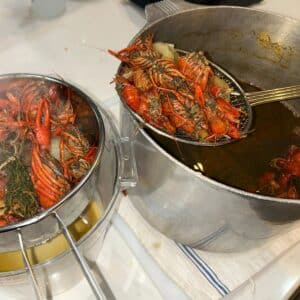
- Crawfish Shells: Shells from a crawfish boil or parboiled crawfish provide the foundation for this stock.
- Onion, carrot, and celery: Fresh vegetables create the aromatic foundation of a rich, balanced stock.
- Garlic: A whole head of fresh garlic adds depth without overpowering the delicate crawfish flavor.
- Green Onions: Whole green onions contribute subtle sweetness and classic South Louisiana flavor.
- Fresh Herbs: Fresh parsley, thyme, and oregano add complexity. Basil is optional but contributes a subtle sweetness.
- Whole Peppercorns and Bay Leaves: Whole peppercorns add gentle spice and aroma without making the stock overly peppery. Bay leaves add subtle depth and help balance the flavors of the stock.
- Salt: Do not add salt to the water when making stock. If using shells from a crawfish boil, the shells will retain some salt from the boil seasonings.
Lagniappe Tip: Collect the crawfish shells and claws after a boil; refrigerate for up to 3 days or freeze the shells for up to 3 months. Do not freeze the shells in water.
Lagniappe Tip: Choosing Your Crawfish Shells: Shells from a crawfish boil carry some of the boil's seasonings into the stock, creating deep and exceptional flavor. For a cleaner, milder crawfish flavor, parboil fresh crawfish in lightly seasoned water, reserve the tail meat for another recipe, and use the shells for stock. Including some of the crawfish fat deepens the flavor and creates a richer stock.
Crawfish "fat" is not really fat at all. This orange to yellow material found in the head of the crawfish is an organ called the hepatopancreas. It is a liver-like organ that is prized for its flavor.
LSU Agricultural Center: Crawfish Facts and Fallacies
Cookware
A heavy-duty stockpot with a lid, a quality strainer, and a spider are worthwhile investments. Even heating and effective straining help create a richer, cleaner stock.
Sign up for my email notifications of new recipes and posts right HERE.
Hints and Tips (FAQ)
Yes. Roasting is optional. Roasted shells produce a deeper, richer flavor, while unroasted shells create a cleaner, fresher-tasting stock.
Stirring can break apart the shells and vegetables, making the stock cloudy. A gentle simmer and occasional skimming produce a cleaner stock.
Yes. Freeze shells as soon as possible after a crawfish boil. Thaw them before making stock for the best flavor extraction.
Crawfish shells usually contain seasoning from the boil. Leaving the stock unsalted gives you better control over the final seasoning in the dish you prepare.
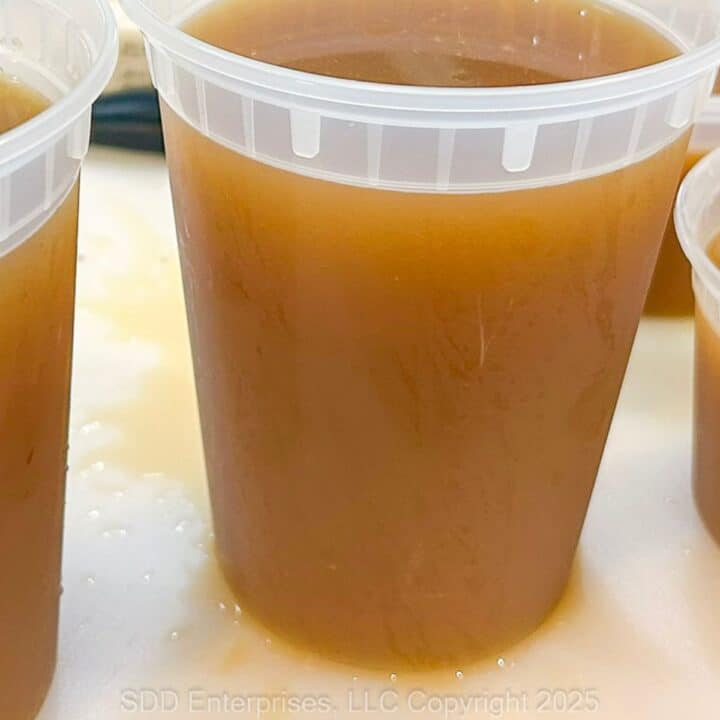
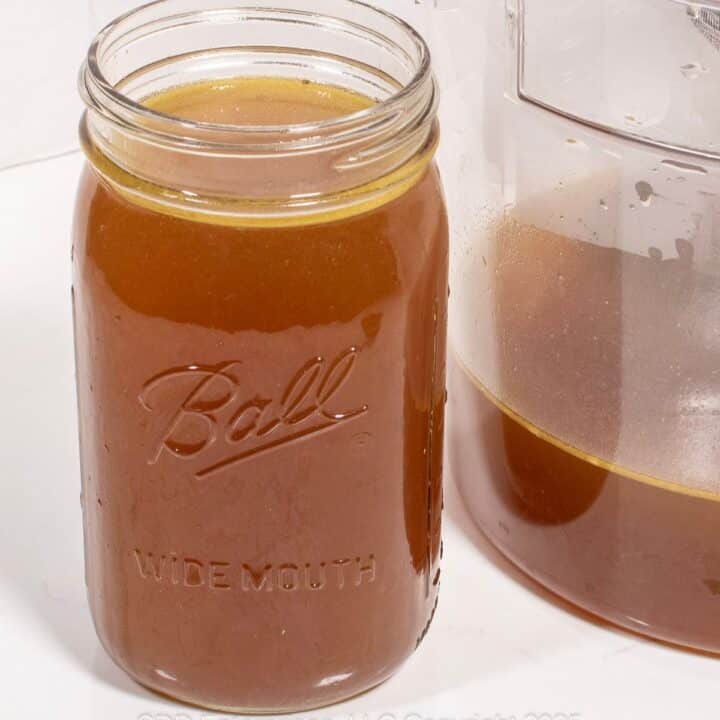
After 1 or 2 hours of gentle simmering, the stock should have a rich amber color and a pronounced crawfish aroma. At that point, most of the flavor has been extracted from the shells.
Here's What You Do
First…you have a beer. That's the secret to no-angst cooking-fun, relaxed, and rewarding. Sip while you read the recipe from start to finish. Then perform your mise en place: gather your ingredients, prep them as they'll be used, and set out your equipment. With everything in place and your mindset right, you're ready to cook with confidence and enjoy the process as much as the meal.
Mise En Place
No-angst cooking continues with mise en place. Before you ever turn on the heat, prep and measure every ingredient exactly as it will be used. When everything's ready to go, most of the work is behind you-and the cooking becomes simple, seamless, and enjoyable.
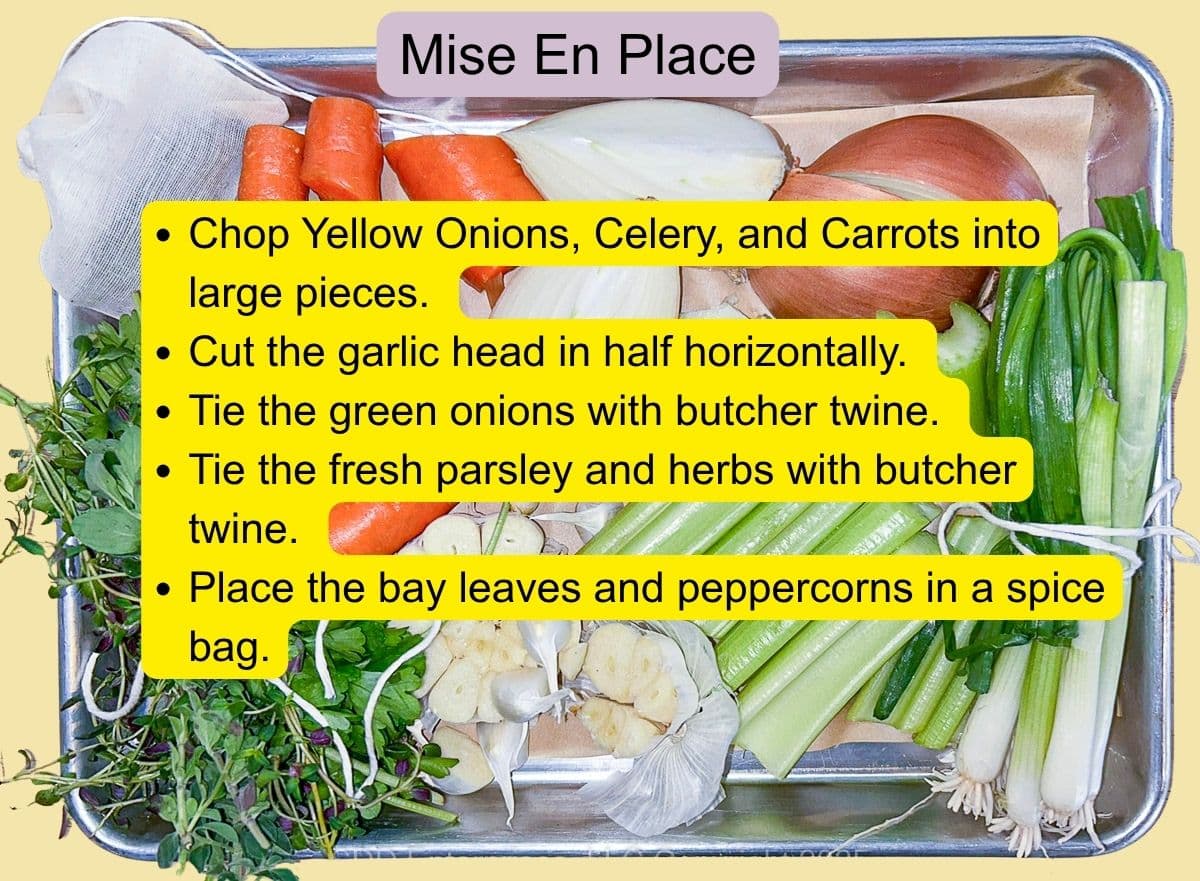
Preparing the Shells: Thaw frozen shells in the refrigerator overnight, then place them in a colander so any accumulated liquid can drain away. Don't rinse the shells before making the stock.
Lagniappe Tip: Leave the green onions whole. They are easier to remove during straining and contribute the same flavor as chopped onions.
Step-by-Step Process
Lagniappe Tip: Roasting the shells is optional. Roasted shells create deeper flavor and darker color, while unroasted shells produce a cleaner, fresher stock.
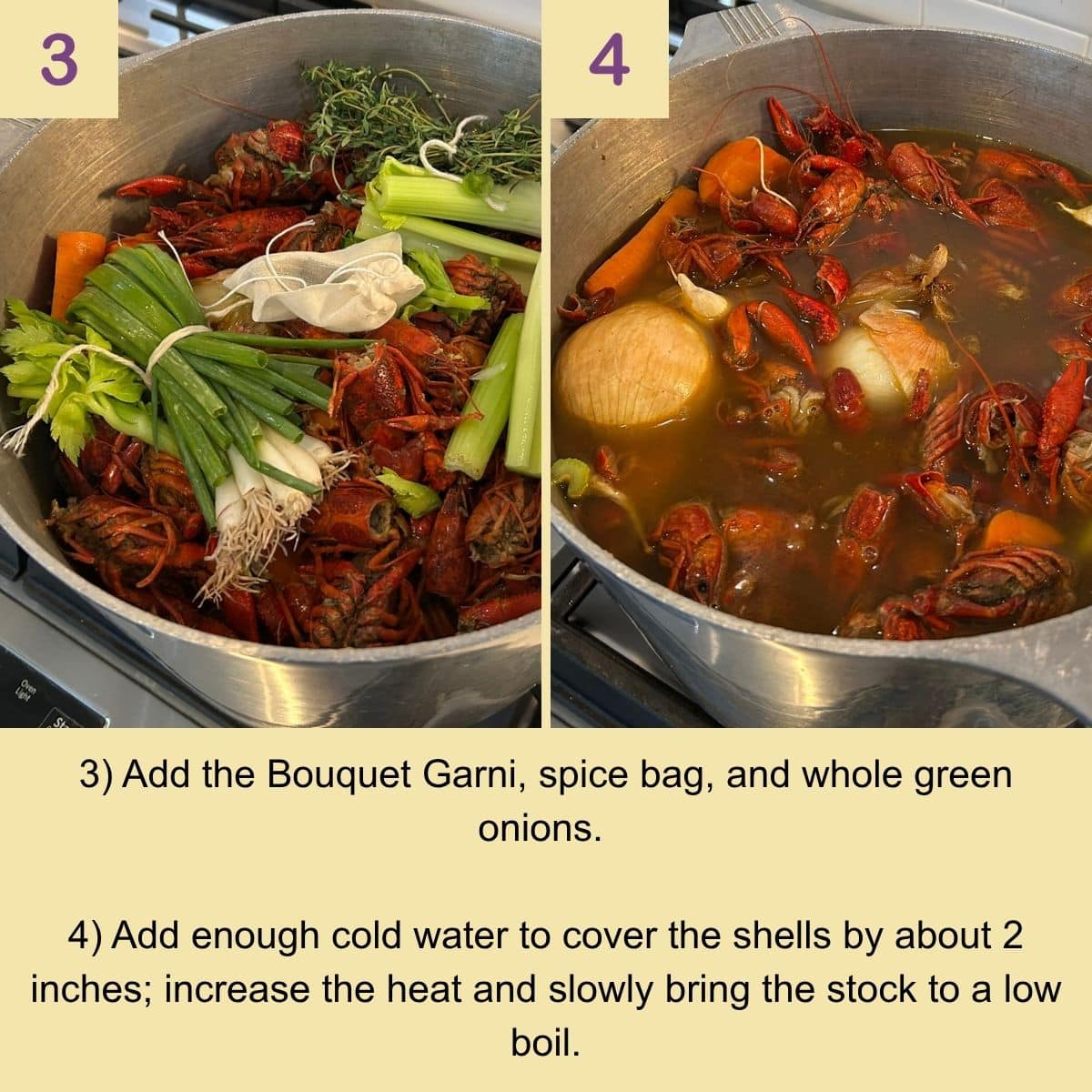
Lagniappe Tip: Start with cold water. Gradually heating the stock helps extract more flavor from the shells and vegetables.
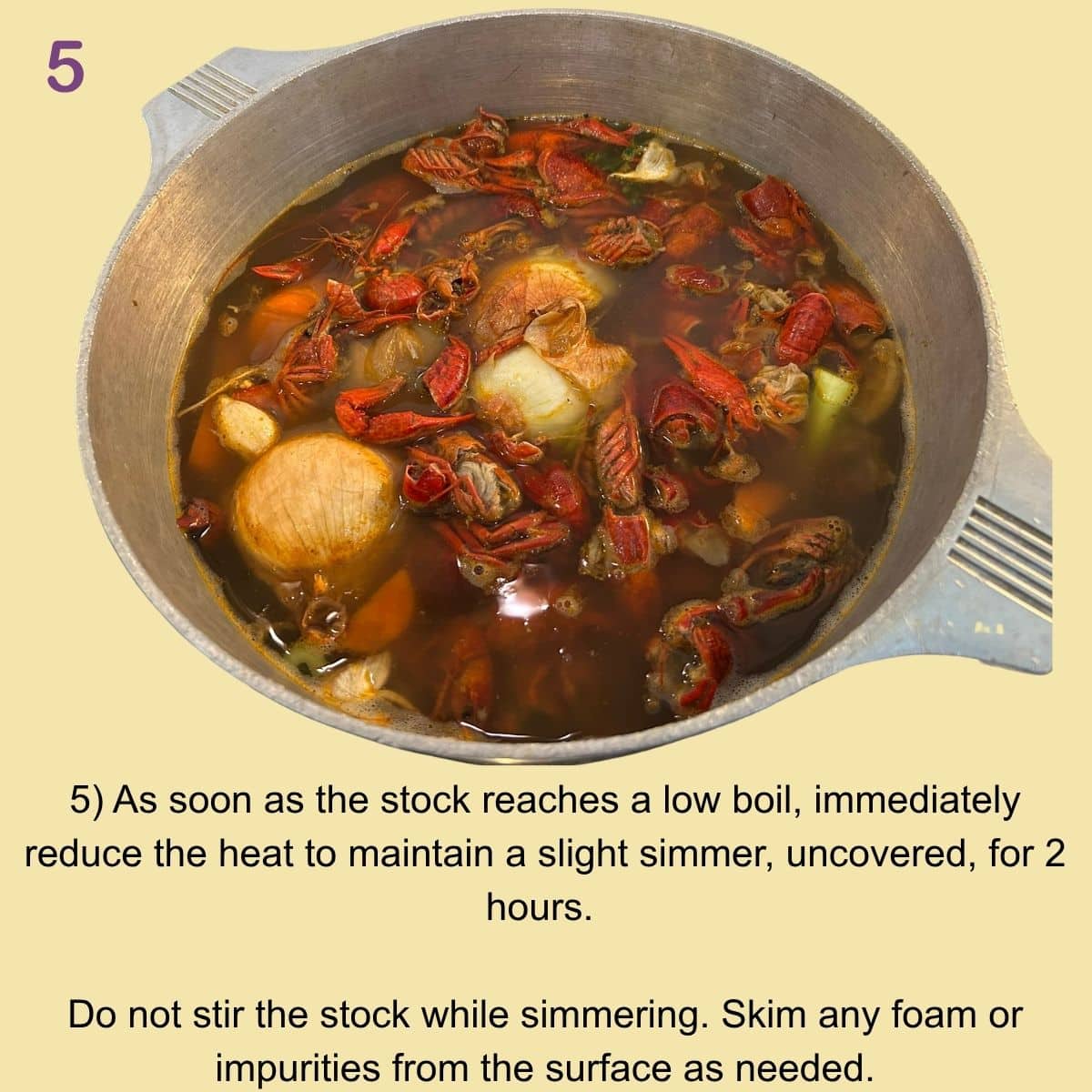
Lagniappe Tip: Resist the urge to stir. A gentle simmer and occasional skimming produce a cleaner, clearer stock.
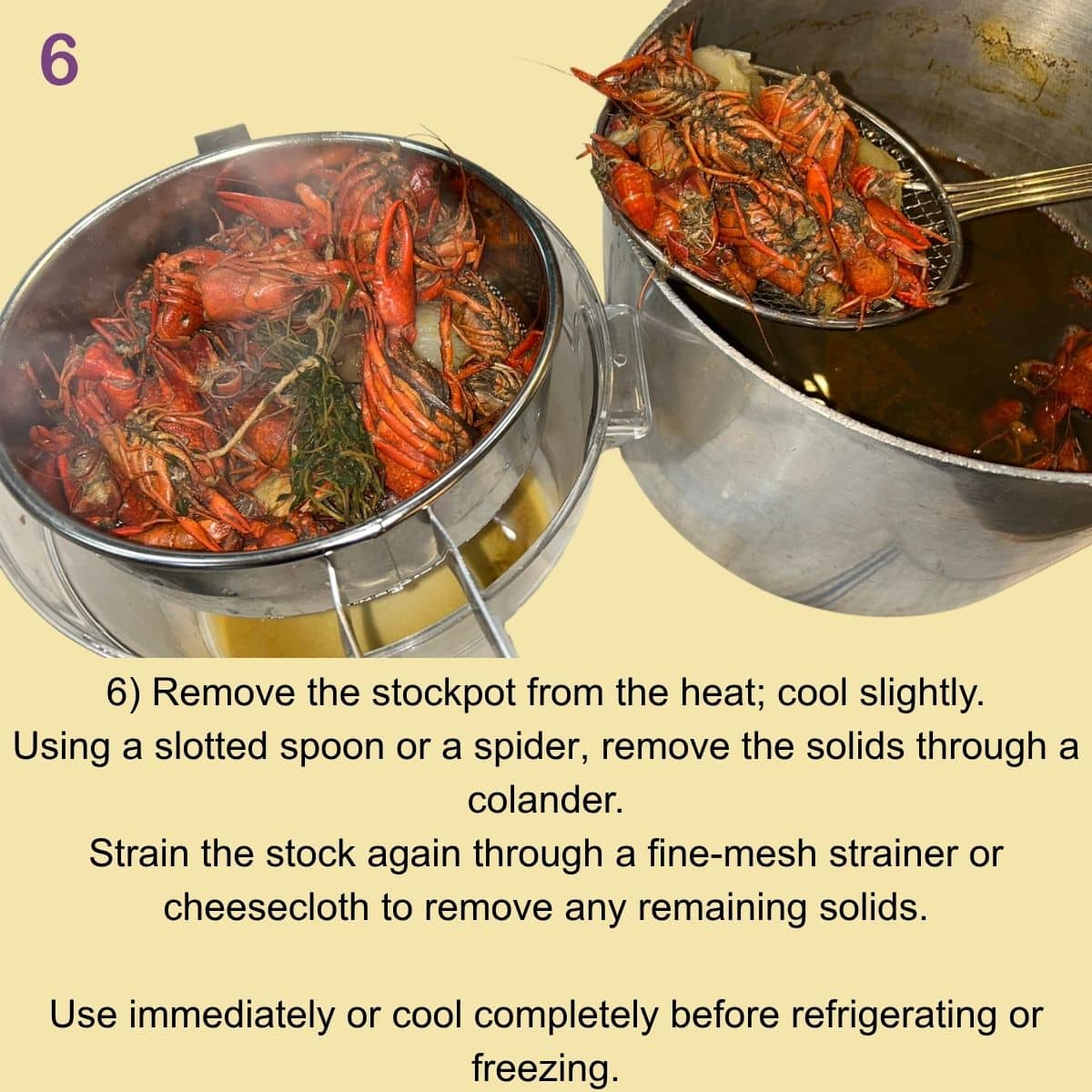
Lagniappe Tip: If the stock smells strongly of crawfish and has developed a rich amber color, most of the flavor has already been extracted.
What can I make with crawfish stock?
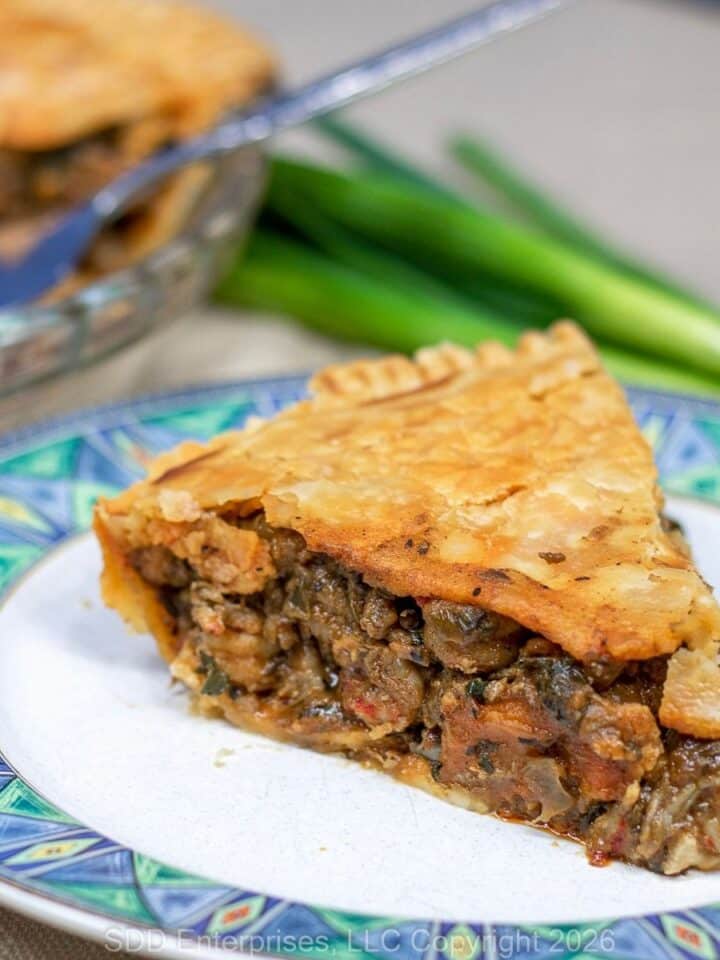
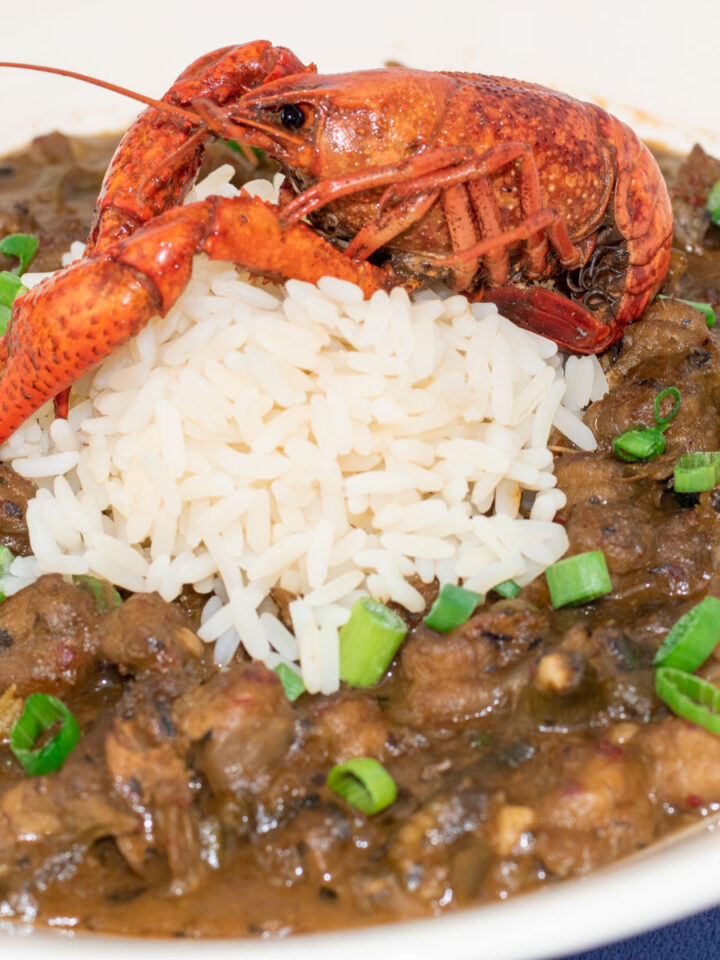
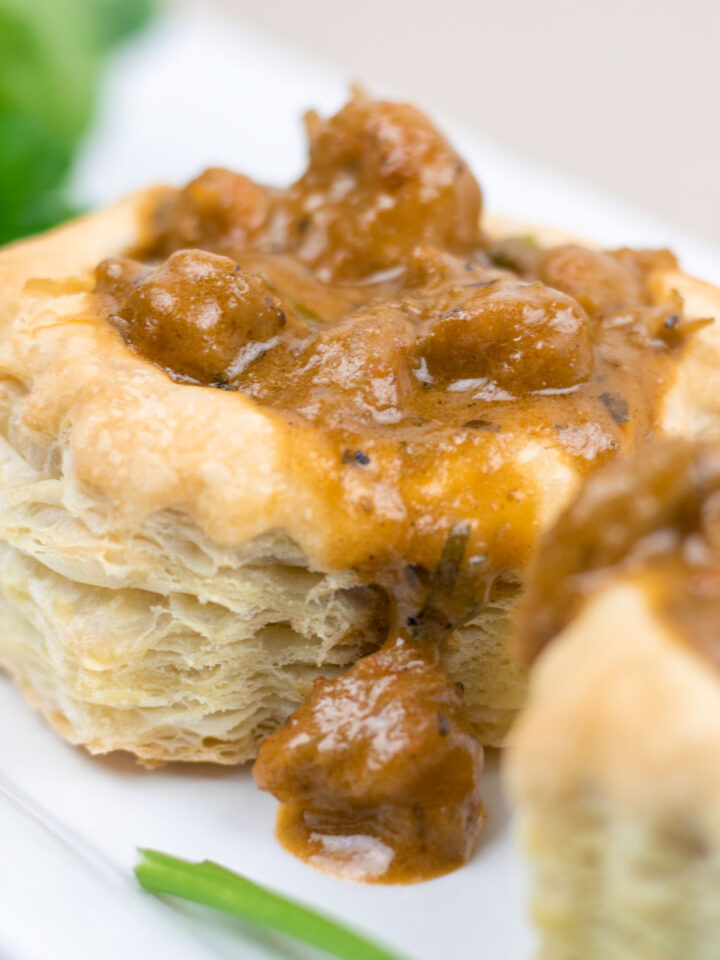
Homemade crawfish stock is excellent in crawfish étouffée, crawfish bisque, seafood gumbo, sauce piquante, soups, sauces, and rice dishes.

Storage Tips
Store cooled stock in airtight containers in the refrigerator for up to 3 days.
For longer storage, freeze the stock in freezer-safe containers for up to 6 months. Leave some headspace to allow for expansion during freezing.
Consider freezing the stock in 1-cup or 2-cup portions so you can thaw only what you need for recipes such as crawfish étouffée, bisque, gumbo, or sauce piquante.
Tell Us About It!
Tried this recipe? ⭐⭐⭐⭐⭐ Leave a 5-star rating and a comment below!
📧 Sign up for email updates so you never miss one.
📸 Share a pic on social and tag us-we'd love to see it!
Publisher's Note: This recipe was originally published in June 2018 as a recipe card without a supporting article. This revision adds detailed instructions, step-by-step images, ingredient notes, FAQs, storage tips, and additional cooking guidance. The recipe itself has also been refined over the years through testing and practical experience, resulting in a simpler process and a cleaner, more flavorful crawfish stock.
Yeah You Right!
Recipe
Homemade Crawfish Stock
Here's What You Need
Stock Ingredients
- 4 to 6 quarts crawfish shells and claws
- 2 tablespoons margarine or vegetable oil
- 1 large onion quartered
- 1 large carrot cut into 2-inch pieces
- 3 stalks celery with leaves cut into 2-inch pieces
- 1 head garlic sliced in half crosswise
- 1 bunch green onions rinsed but left whole
- 10 whole black peppercorns
- 2 bay leaves
- 16 to 18 cups cold water or enough to cover the shells by about 2 inches
Bouquet Garni
- 1 bunch fresh parsley
- 1 ounce fresh thyme
- 1 ounce fresh oregano
- 1 ounce fresh basil optional
Here's What You Do
Optional: Roast the Shells for Deeper Flavor
- Preheat the oven to 400°F.
- Spread the crawfish shells and claws in a single layer on one or two baking sheets.
- Melt 2 tablespoons of margarine and pour it over the shells. Mix well to coat them lightly.
- Roast for 15 to 20 minutes, until aromatic.
- Remove the baking sheets from the oven and set aside until needed. Reserve any liquid that develops.
Prepare the Ingredients
- Quarter the onion (peel only the loose skin).
- Cut the carrot and celery into 2-inch pieces.
- Slice the head of garlic in half crosswise.
- Rinse the green onions, leave them whole, and tie with butcher string.
- Tie the parsley, thyme, oregano, and basil (if using) together into a Bouquet Garni.
- Place the peppercorns and bay leaves in a spice bag or cheesecloth sachet.
Make the Stock
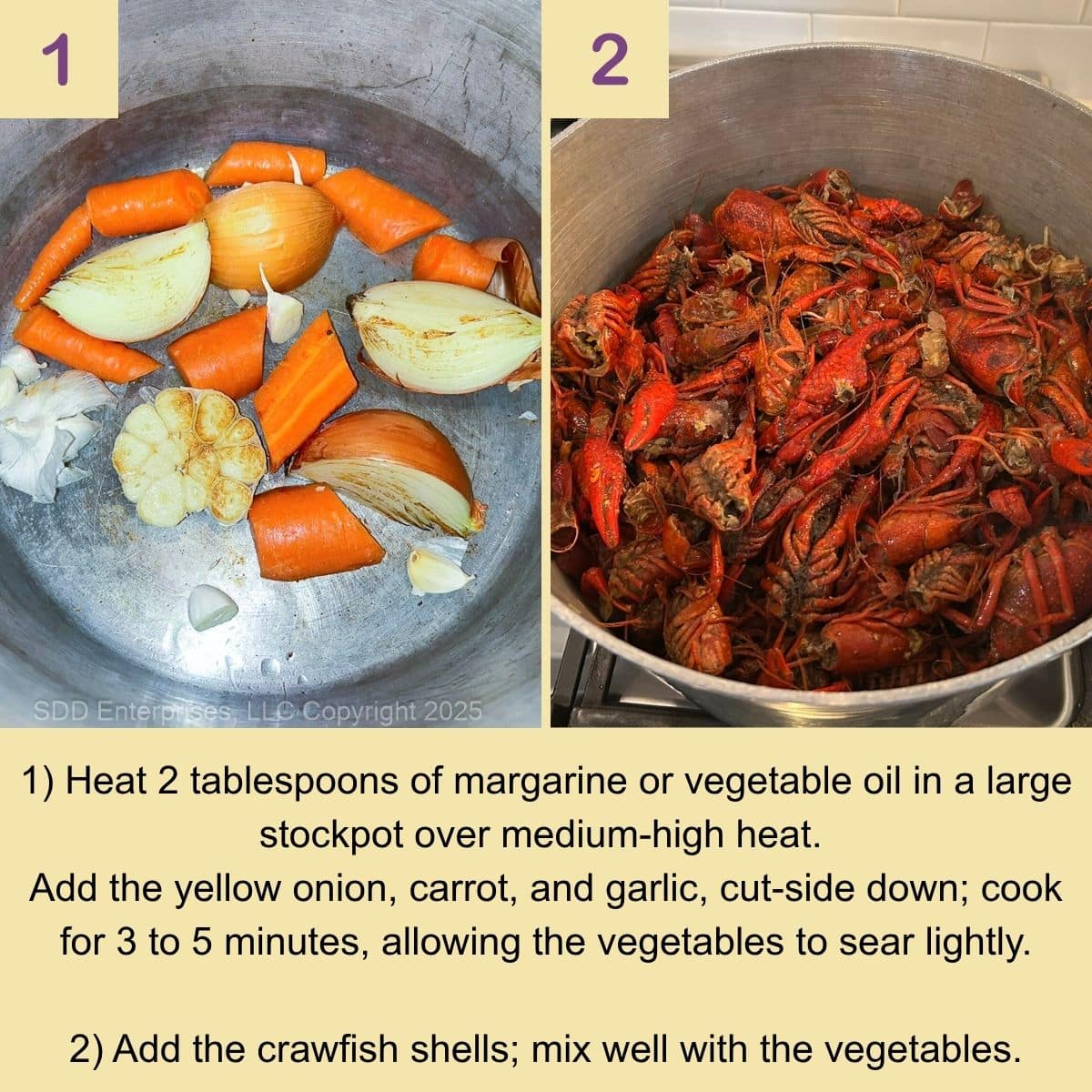
- Heat 2 tablespoons of margarine or vegetable oil in a large stockpot over medium-high heat.
- Add the onion, carrot, and garlic halves cut-side down; cook for 3 to 5 minutes, allowing the vegetables to sear lightly.
- Add the crawfish shells and claws, roasted or unroasted, and mix well with the vegetables. If roasted, add any juice that accumulated while roasting.
- Add the Bouquet Garni, spice bag, and green onion bundle.
- Add enough cold water to cover the shells by about 2 inches.
- Increase the heat and slowly bring the stock to a low boil.
- As soon as the stock reaches a low boil, immediately reduce the heat to maintain a slight simmer.
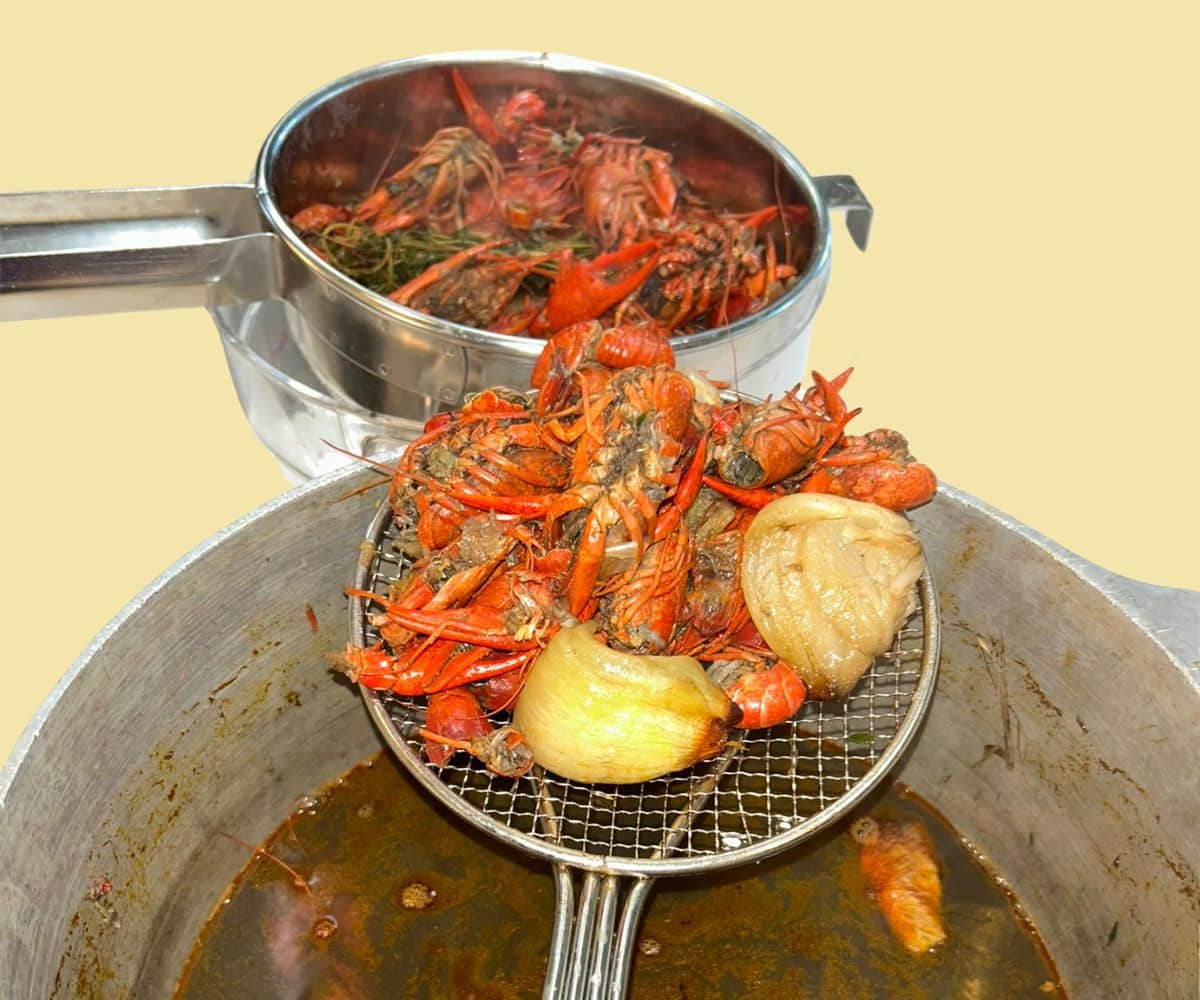
- Maintain a light simmer uncovered for 2 hours. Do not stir the stock. Skim any foam, impurities, or excess fat from the surface as needed.
- Remove the stockpot from the heat and allow the stock to cool slightly.
- Strain through a colander, removing all shells, vegetables, herbs, and seasonings.
- Strain again through a fine-mesh strainer or cheesecloth to remove any remaining solids.
- Use immediately or cool completely before refrigerating or freezing.
Recipe Notes
A non-roasted stock has a cleaner, fresher crawfish flavor that works especially well in delicate soups and sauces.
Do not add salt to the stock. Crawfish shells from a boil usually contain residual seasoning, and it is easier to adjust the salt level in the finished dish.
Avoid stirring while the stock simmers. A gentle simmer and occasional skimming will produce a cleaner, clearer stock.
Refrigerate for up to 3 days or freeze for up to 6 months.
Nutrition Estimate

It's Me!
Louisiana is a wonderful place where the rich cultural heritage enriches and entertains. I'm Dave Howson, aka Sweet Daddy D. I'm glad you found my website and I look forward to exploring the cultural mosaic of Louisiana with you…
read the "It's Me" page to find out more about me and this website…
Sweet Daddy D says
This homemade stock will any recipe.
Jim says
Hello just started using stocks when cooking with crab.shrimp and crawfish should I use individual stocks are just a seafood sock which is better??
Sweet Daddy D says
Hey, Jim. It's always best if you match the stock with the proteins. If you're making Crawfish dishes, use crawfish stock, shrimp gumbo, use shrimp, etc. A good seafood stock can be used with any seafood. Chicken stock is a good generic stock that can be used with just about anything. Good luck, keep cooking!
Jim says
Great thanks ok I tryed the crawfish stock after a crawfish boil I used heads tail shells and claws stock came out good but I couldn't use it I think the heads had to much seasoning because the came out to hot to cook with where did I go wrong lol thanks jim
Sweet Daddy D says
Hey, Jim. That’s always possible when you use the shells from a boil. I’d try diluting the stock with some water. Next time, maybe cleaning the heads out a little more may be helpful.
JoJo says
I made this for the first time last year and I have been immensely looking forward to making it again this year! The recipe is well detailed and easy to follow. Before trying this recipe out I had never made stock before in my life. After making this recipe a few times last year I feel very confident in experimenting with many different kinds of stock.
Again, this recipe is so delicious that I have come back to it a second year in a row. I highly, highly recommend!!
Sweet Daddy D says
Thanks, JoJo! Thanks for giving the recipe a try, glad you liked it! I appreciate you taking the time to let me know!
Elana says
Out of this World!!! A very big slice of Home!!!
Sweet Daddy D says
Yeah you right, Elena! Thanks!
Joann says
When you say crawfish shells do you mean the whole body of the crawfish ?
Sweet Daddy D says
Yes, I use everything I peel off the crawfish.
Jodie Hebert says
I recently made a homemade Crawfish Stock for Bisque, but used already boiled crawfish and did not roast them in the oven prior to the stock pot. I am assuming this recipe starts with already cooked crawfish, for example, from a boil, correct?
Sweet Daddy D says
That is correct, Jodie Hebert. You can skip the roasting step if you prefer. I think it helps deepen the flavor a bit, but I have skipped that steps if I was in a crunch for time. Sometimes I "saute" the shells in the stock pot before adding the other ingredients, but you can even skip that step if you like.
ann says
Just the way I make it. I hate thyme...it will ruin a dish for me so I sub sage or rosemary. Btw, I just cooked up a bunch of fresh crawfish and my one neighbor was terrified of them! I even showed him how to eat them. He tried one and didn't like the flavor (WTF?). Too much work he said. Haha! His loss. More for me and they were so good. Yum!
Sweet Daddy D says
Hey, Ann. Thanks for reaching out. You are not alone in your feelings about thyme. Lots of people feel the same way (kind of like cilantro!). My Mother-in-Law is with you on this one, I never put thyme in anything I cook for her. I'll pray for your neighbor, keep at him, I bet he converts, they always do!
Cheryl says
Taste pretty good!
Sweet Daddy D says
Thanks, Cheryl!